What’s emerging

The gorilla in the boardroom

Why experience is the new blind spot for leaders.

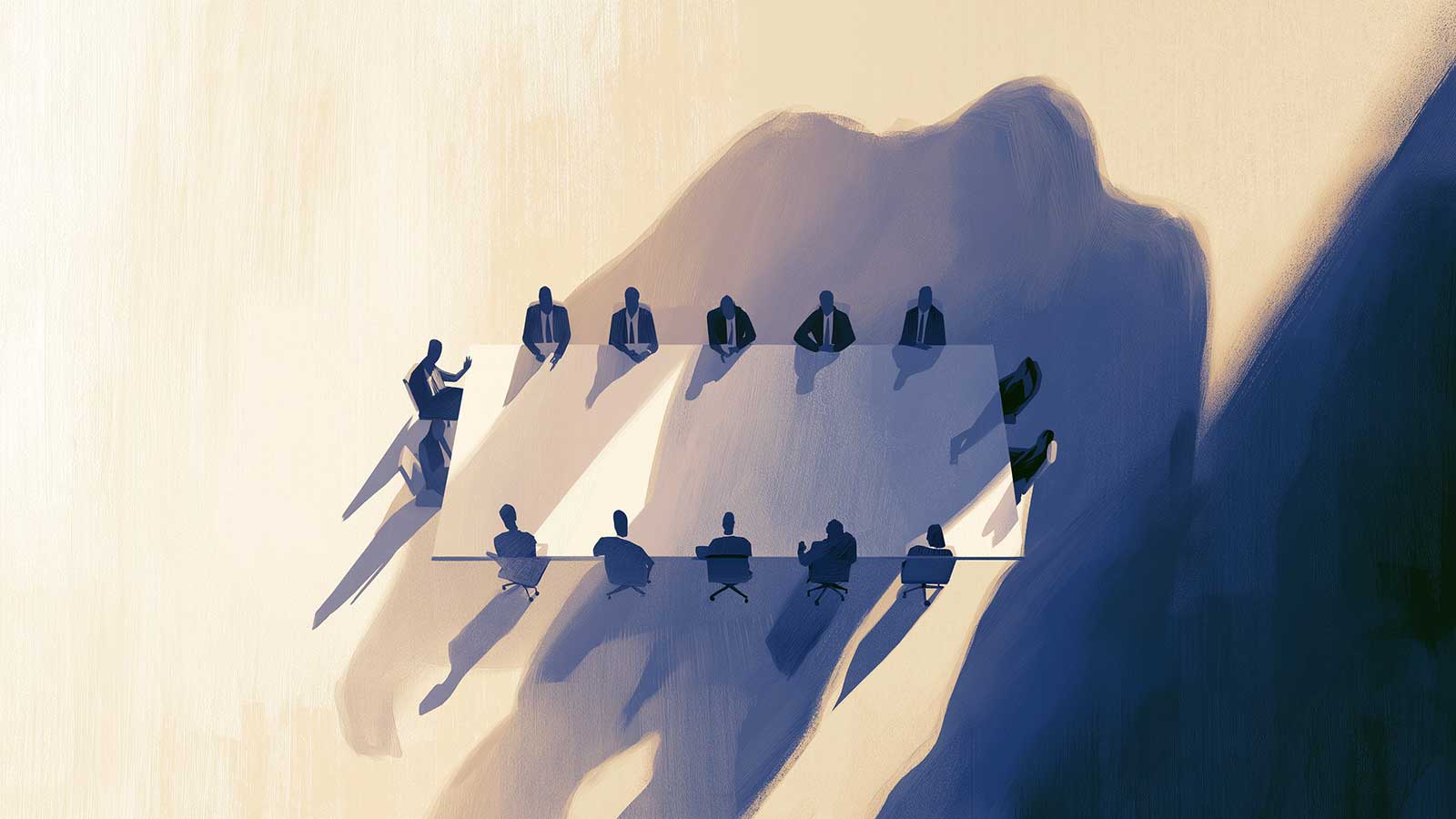
A gorilla seated calmly in a modern boardroom — a metaphor for the overlooked truth that expertise is trained not to see.

Every future begins as heresy. Someone in the room challenges what the experts know to be true. The replies come fast: “That’s not how our customers behave.” “We’ve tried that, it doesn’t work.” “You can’t automate creativity.” Experience defends itself, doing what it’s trained to do: protect what works. Yet this same instinct that built success often guarantees decline.

Here’s how that plays out in real life.

In 2013, researchers at Brigham and Women’s Hospital conducted an experiment on 24 radiologists—highly experienced experts who’d spent decades finding tiny anomalies in CT scans. The task was simple: find the lung nodules in a series of chest scans. For the final case, they inserted something into the image: a gorilla, forty-eight times larger than a typical nodule. Massive. Absurd. Impossible to miss.

Eighty-three percent of the radiologists missed it. Eye-tracking data showed they actually looked directly at it. Their brains—exquisitely trained to search for one specific pattern, to find the small white spot that signals disease—filtered out everything else. Including a primate.

A chest scan on a lightbox with a gorilla shape hidden in the anatomy, echoing the radiology study.
In the 2013 study, expert radiologists looked directly at the gorilla — and 83% never saw it.

Even expert searchers, operating in their domain of expertise, are vulnerable to inattentional blindness.

The trap isn’t incompetence. It’s expertise. The very thing that makes you valuable can also make you blind.

The science of success

When you’re genuinely good at something—decades of success, deep pattern recognition, a proven track record—your brain begins to automate your expertise. Procedural memory takes over and you start operating on reflex. That efficiency probably built your career. You recognized patterns faster than anyone else, made confident decisions while others gathered data, and your instincts were rewarded again and again.

But now, the game is changing. Right now. Categorically. Yet your expertise is calibrated on yesterday’s rules. Automaticity, once a superpower, can quietly turn into a liability. Over time, your perception narrows. You stop noticing what doesn’t fit the pattern. The brain filters for familiarity, not novelty. That’s how experts end up missing what’s right in front of them.

Here’s the cost: when expertise becomes automatic, it also becomes replaceable. AI systems that once supported human decision-making now replicate it. What once took years to master can now be learned through prompts, templates and machine-assisted workflows.

Your edge is no longer what you know how to do—it’s how you think about what needs to change. The leaders who thrive now aren’t the ones optimizing yesterday. They’re the ones willing to let it go.

When expertise becomes blindness

About five years ago, I was part of a strategic foresight project for one of the world’s most successful creative enterprises. Our team of futurists was helping the organization prepare for structural shifts ahead.

This company was built on a singular competitive advantage: world-class imaginative talent. Extraordinary creative minds who conjured powerful stories, compelling characters and stunning visual experiences. That’s what made them exceptional.

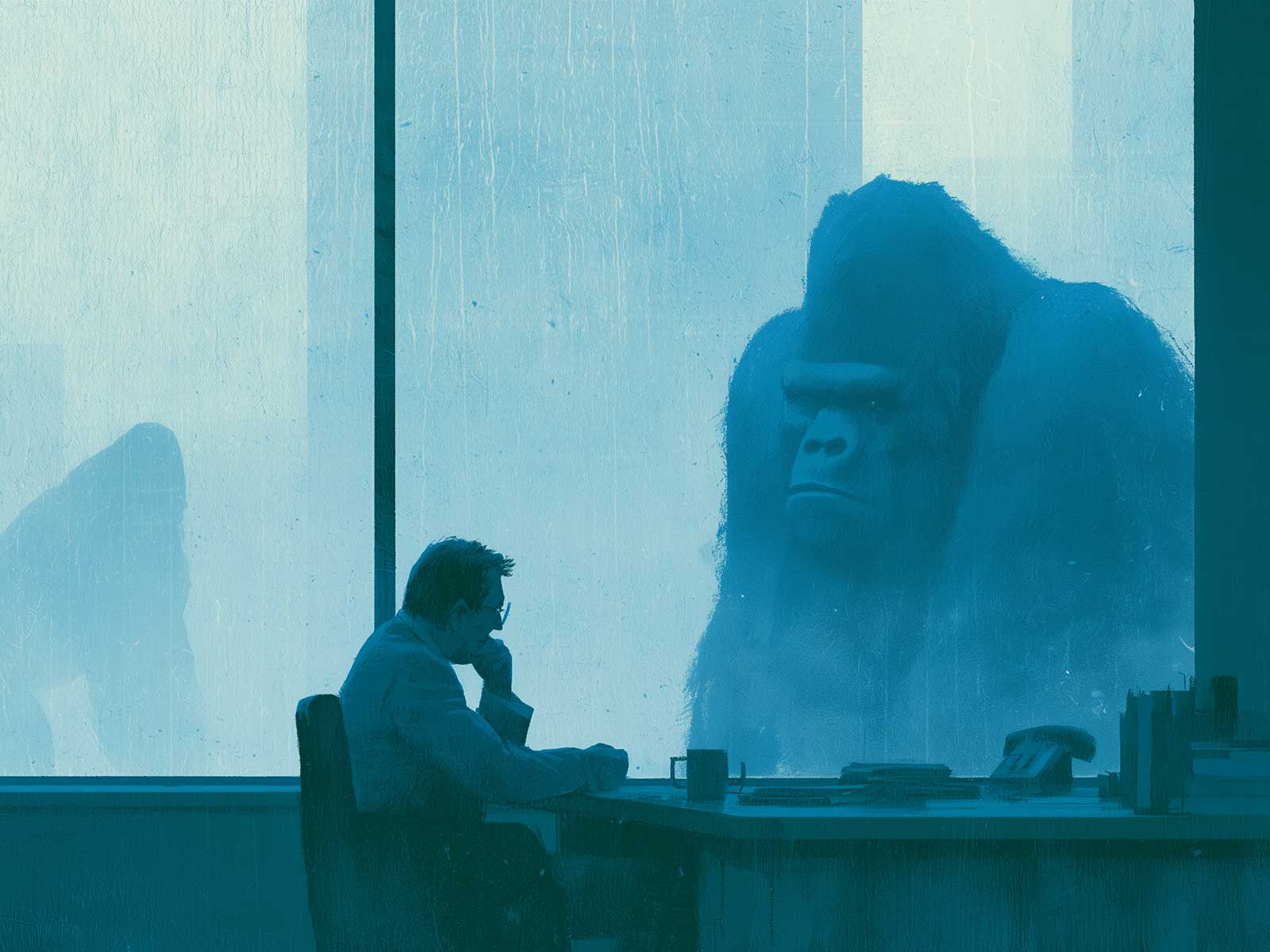
An executive at a window, composed and certain, while a gorilla stands in plain view outside.
Expertise looking straight at what it is trained not to see.

We presented a scenario: Within a few years, sophisticated creative work would become accessible to anyone with a computer or smartphone. Storytelling. Visual design. Animation. Character development. Commoditized. Democratized.

Their response? Dismissal. Because their experience told them otherwise. They’d been through the rise of the internet, union strikes, technological disruptions and economic downturns. They always came out ahead. Their pattern recognition said: This too will pass. We’ve weathered worse.

But this wasn’t only an economic challenge; it was existential. If what made them special became ordinary, who would they be? And when identity is at stake, logic rarely wins.

Fast forward five years. AI models can now write, illustrate and produce video in seconds for pennies. The scenario they dismissed is reality. Their expertise—once a moat—has become a mirror. Their experience (and perhaps their pride) wouldn’t let them see what our expert views were telling them.

That’s what expertise does. It protects the past long after the future has arrived.

How to see again

Research on organizational change shows that transformation starts with disconfirmation—recognizing that what used to work no longer does. That realization triggers dissonance, the discomfort of being wrong. Most leaders bail here. They rationalize, explain away evidence and retreat to what they know.

But those who stay in that discomfort long enough begin to relearn. They replace defense with curiosity. That’s the difference between relevance and obsolescence.

Neuroscience shows that mid-career leaders are actually wired for this kind of flexibility. The adult brain can integrate both deep experience and new information better than any other stage of life. We’re not neurologically stuck, we’re emotionally attached. That’s different—and it’s fixable.

Start small. In your next meeting, when someone challenges a core assumption, notice your first instinct. Do you defend? Explain why they’re wrong? Or pause long enough to ask: What if they’re seeing something I’ve been trained not to see?

That pause is leadership.

Here’s the tell: If your instinct right now is that other leaders are the ones stuck in the past, and that this doesn’t apply to you—that’s exactly when it applies most.

Your experience isn’t the problem. Unexamined expertise is. And that gorilla? It’s not in the scan anymore. It’s in your conference room. And every day you don’t acknowledge it, it gets bigger.

An empty chair turned toward a bright window, warm morning light.
The pause — choosing curiosity over defense.