Future Artifacts

Signals from the edge

When the hospital starts listening too closely

Published July 2, 2026

The recording did not start with a corporate product. Long before ambient AI scribes entered the exam room, burned-out physicians were already building workarounds — a shared server, a smartphone voice memo, a quick recording after the visit — just to finish the chart before going home.

Ambient AI documentation systems use microphones, speech recognition and generative AI to turn clinical conversations into draft notes for the medical record. They promise relief from documentation burden, and early evidence suggests real gains. But recent lawsuits now allege that some patients were recorded without adequate consent. At the same time, patients are beginning to record their own visits. The foresight question is no longer whether hospitals can listen. It is what has to be true before patients trust them to.

Patients have started recording their doctors back

A wave of consumer apps — VisitRecall, Advoca Health, Kin Health — now let patients record and transcribe their own visits; Kin Health, backed by GoodRx’s co-founder, raised a $9 million seed round in May 2026. The asymmetry is starting to run both ways: health systems are recording to create clinical notes, while patients are recording to create their own account of what happened. This is not evidence that hospitals are losing control. It is evidence that patients no longer assume the official record is the only record that matters.
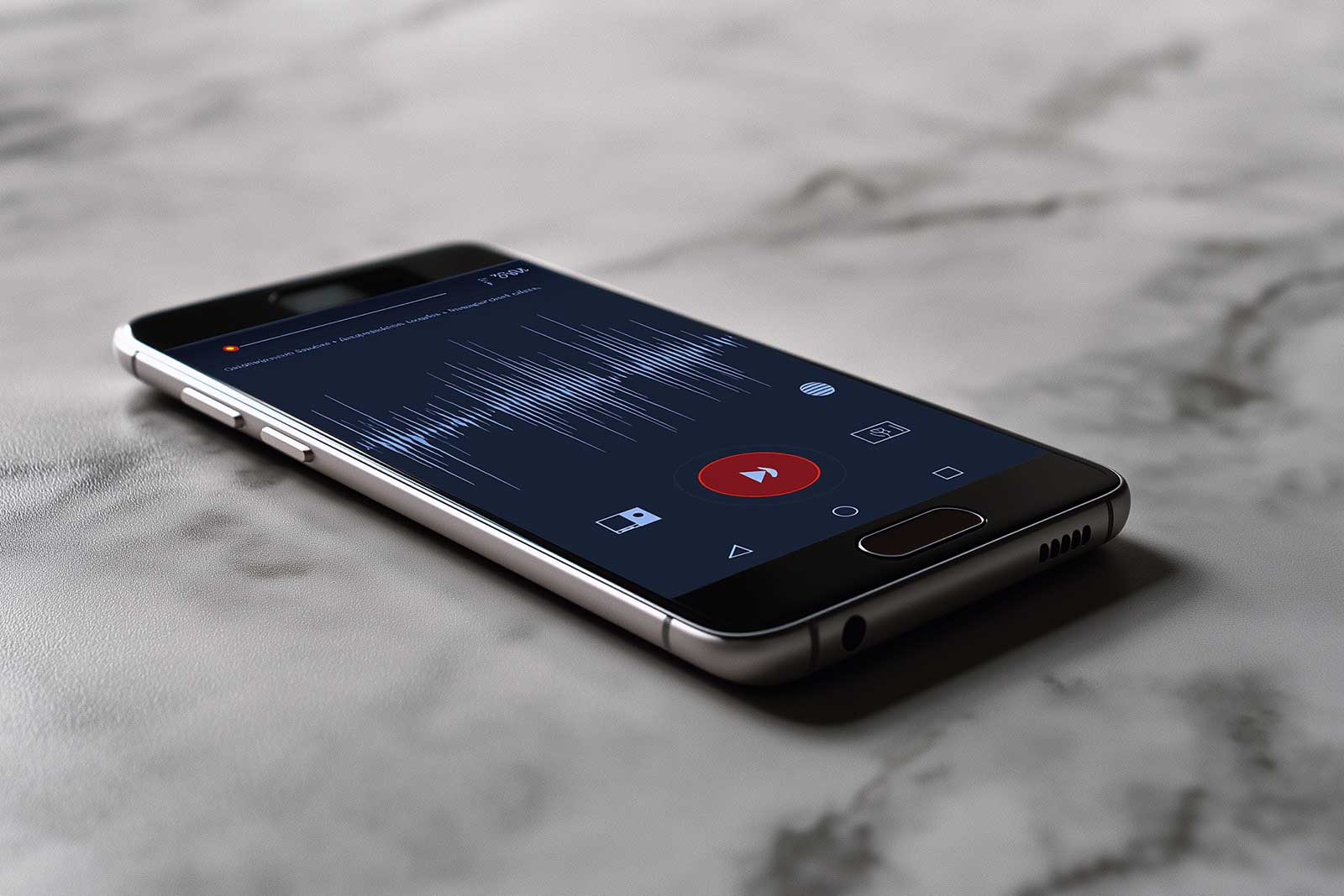
A patient's phone showing a live audio transcription app during a clinical visit
Image · patient recording back

Doctors have been recording themselves for years, quietly, to save time

Long before ambient AI scribes existed, physicians were already building workarounds — an ethnography found doctors running a shared server as an unofficial parallel record,1 and others made smartphone voice memos after each visit just to finish notes before going home.2 This wasn’t corporate surveillance; it was clinicians solving a problem the official system couldn’t. Almost nobody had rules for it: in a survey of 49 large U.S. health systems, only two had any policy covering clinic-visit recording.3 Newer tools like DocNote formalize the instinct — physician-controlled, local, deleted within seven days.

A physician's smartphone recording a brief voice memo after a patient visit
Image · shadow documentation

The record itself allegedly documented consent that was not given

Patients are suing Sharp HealthCare and, separately, Sutter Health and MemorialCare, alleging clinicians used an ambient AI scribe to record visits without informed consent. In the Sharp complaint, the EHR notes reportedly stated the patient had been advised of and consented to the recording — when, per the complaint, no such conversation ever took place. The lawsuits do not prove misconduct. They do show that consent has moved from implementation detail to legal exposure.

A printed after-visit summary document with a checked consent checkbox
Image · consent record mismatch

Camera vendors are already selling what they do not collect

Vendors are now selling privacy architecture alongside detection. IntelliSee markets fall detection without wearables, facial recognition or video storage; Milestone’s XProtect Hospital Assist emphasizes remote observation and configurable privacy features. One pilot stroke-unit deployment cut falls by 83.33%, with 95.34% alert accuracy.5 The sales pitch is no longer only “what can we detect?” It is also “what do we avoid capturing?”

An anonymized skeletal pose-estimation overlay of a human figure on a monitor
Image · camera privacy design

Signal vs. noise

The signal is not that recording is new. The signal is that recording has become automated, ambient, legally contested and reciprocal. These developments sit on top of several claims that sound similar but deserve different levels of trust. This is where we separate emerging signals from familiar ideas being stretched too far.

Signal

Documentation relief is real and quantified

One health system saw 20.4% less note time and 30% less after-hours work after adopting an ambient scribe.6 The workflow case isn’t hype.

Signal

Privacy-preserving monitoring has become a visible product claim

It is no longer one vendor’s marketing angle. Some hospital monitoring products now lead with what they do not capture — no facial recognition, no stored video or privacy blurring — because trust has become part of the product, not just the compliance wrapper.

Signal

The governance path is becoming clearer, but uneven

Recent guidance suggests health systems should distinguish transient processing data from the final legal medical record: raw audio and intermediate transcripts may be deleted after clinician verification, while final notes and minimal provenance metadata remain.4 Some tools make retention limits explicit. Many deployments still leave those rules unclear.

Noise

“A near-zero refusal rate proves patients consent”

A refusal rate under 0.5% under standardized notification looks like acceptance — but a separate study found comfort with ambient documentation fell from 81.6% to 55.3% the moment patients got the full disclosure.7 Minimal notice produces compliance, not consent.

Noise

“Patients have a real opt-out”

The right exists in principle, but the literature shows it’s nearly impossible to exercise once a patient’s data is already inside a model that’s learned from it.8

Noise

“Deleting the recording solves the privacy problem”

In benchmark testing, every large language model examined leaked third-party information into the generated clinical note at least sometimes, and no single safeguard eliminated it.9 The leak can already be baked into the text before the audio is ever deleted.

What would make this real

As of July 2026

AI-based patient monitoring already exists in partial, uneven forms. The question is what would have to change before a leader should treat it as trusted by default rather than something patients need a kit to refuse.

WatchpointWhat would change the decisionCurrent status
Prospective, multi-site validationCamera and ambient monitoring systems show real outcomes across multiple hospitals, not one pilot deployment.510EmergingPilot results are strong; multi-site data is scarce.
A real recording policy becomes standard, not the exceptionHealth systems adopt a dedicated policy covering clinic-visit and documentation recording, rather than leaving it uncovered.3Not yetOnly 2 of 49 large U.S. health systems had any covering policy.
Layered consent standard adopted at scaleHealth systems implement tiered, honest consent — not a sign in the waiting room — as the default, not a pilot policy.11EarlyProposed in the literature; not yet standard practice.
Federal baseline regulationA federal floor specific to ambient clinical recording and AI documentation replaces today’s mix of HIPAA, wiretap law, state consent rules and emerging state AI statutes.Not yetTexas, California and Colorado illustrate the current patchwork; no single federal equivalent exists.
A genuinely operable opt-outPatients can meaningfully withdraw even after their data has already been incorporated into a learning system.8Not yetThe right exists on paper; the mechanism mostly doesn’t.
Independent validation standards requiredFairness, explainability and accuracy validation become a requirement for deployment, not an academic proposal.4EarlyFrameworks proposed; not yet enforced.

How to build readiness

1Separate consent from mere notification

A sign in the waiting room is notification. It is not consent. The lawsuits already in court turn on exactly this distinction — treat it as the line it actually is, not a formality to clear.

2Pilot disclosure honestly

Expect comfort to drop as patients learn more, not to stay flattering. A near-perfect acceptance rate under thin notification isn’t a result to protect — it’s a sign the disclosure isn’t real yet.

3Keep the value streams separate

Most disappointment comes from collapsing distinct kinds of value into one promise. Judge each on its own evidence:

  • Workflow-relief valueDoes it measurably reduce documentation burden?
  • Clinical-outcome valueDoes more complete data change what care a patient receives?
  • Safety-detection valueDoes it catch falls or deterioration faster than staff alone?
  • Dignity-and-trust valueWould a patient consent again knowing everything it does?
  • Legal-exposure valueWould the consent record survive being read aloud in court?

4Build the opt-out before go-live

Not after a complaint forces it. Once a patient’s data is already inside a model that has learned from it, withdrawal stops being a real option — the mechanism has to exist before the system does.

The futurist’s take

It was never about the microphone.
It was about what nobody said out loud.

The tools may reduce documentation burden. Patients may benefit when clinicians look at them instead of the screen. But ambient recording changes the moral contract of the visit. A patient who discovers after the fact that the room was listening will not experience that as innovation. They will experience it as a breach.

The organizations that get this right will treat consent as infrastructure: visible, revocable, specific and built before deployment. They will also assume patients can now check the record for themselves.

From evidence to artifact

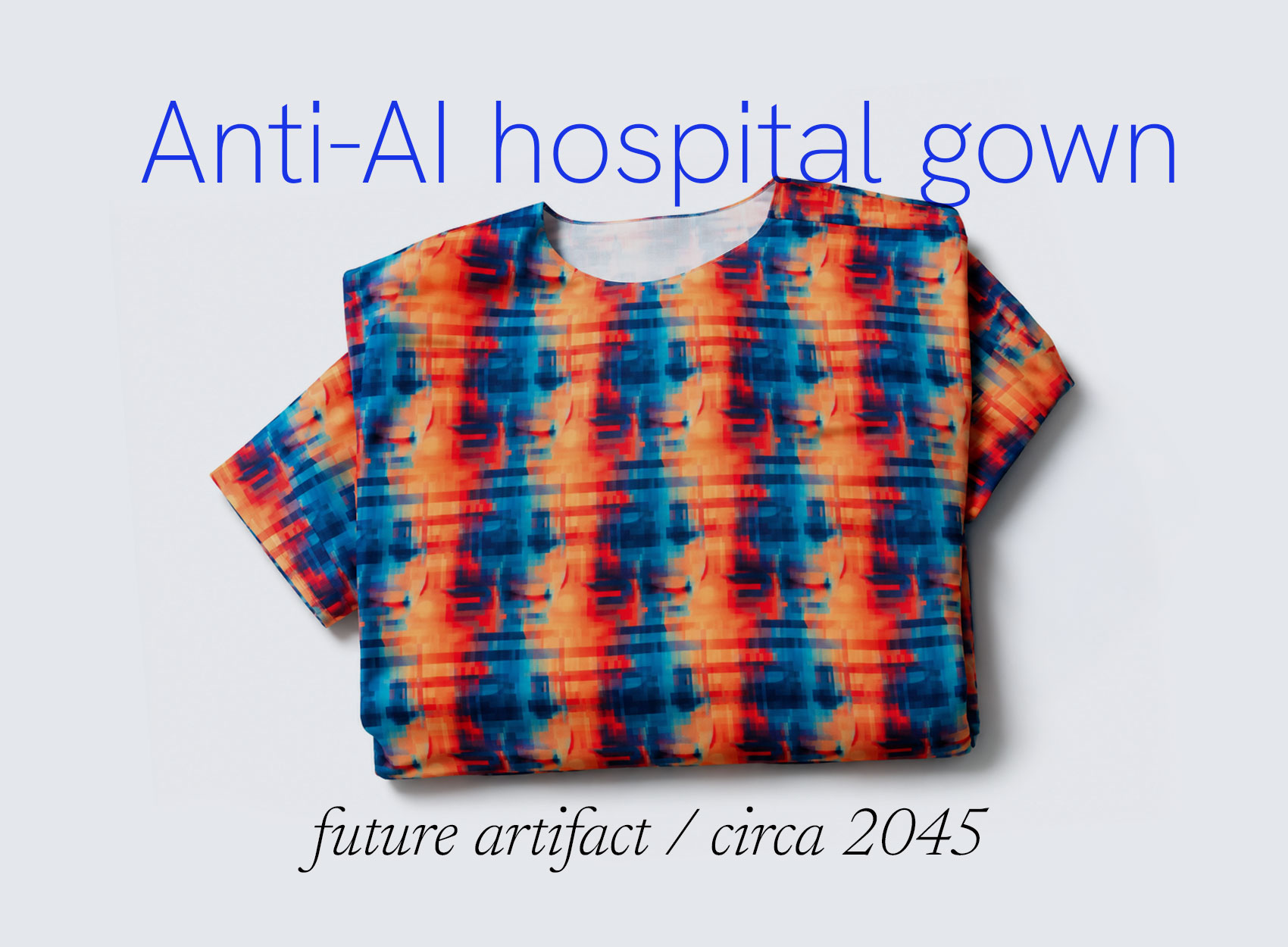
See how we used disciplined imagination to turn weak signals into a tangible artifact from the future.

References

  1. Mörike, Spiehl and Feufel (2022). Workarounds in the Shadow System: An Ethnographic Study of Requirements for Documentation and Cooperation in a Clinical Advisory Center. doi:10.1177/00187208221087013
  2. Payne and Turner (2023). “I’m not burned out. This is how I write notes.” doi:10.1093/jamiaopen/ooad099
  3. Barr et al. (2018). Audio-/Videorecording Clinic Visits for Patient’s Personal Use in the United States: Cross-Sectional Survey. doi:10.2196/11308
  4. Ohde et al. (2026). Barriers and opportunities of scaling ambient AI scribes for clinical documentation across diverse healthcare settings. doi:10.1038/s41746-026-02554-0
  5. Danial et al. (2025). AI-based patient monitoring for fall prevention in stroke patients: a pilot study at a Malaysian acute stroke unit. doi:10.1186/s12984-025-01706-9
  6. Duggan et al. (2025). Clinician Experiences With Ambient Scribe Technology to Assist With Documentation Burden and Efficiency. doi:10.1001/jamanetworkopen.2024.60637
  7. Lawrence et al. (2025). Informed Consent for Ambient Documentation Using Generative AI in Ambulatory Care. doi:10.1001/jamanetworkopen.2025.22400
  8. Weiner et al. (2024). Ethical challenges and evolving strategies in the integration of artificial intelligence into clinical practice. doi:10.1371/journal.pdig.0000810
  9. Chim et al. (2026). Evaluating privacy leakages in LLM-driven ambient clinical documentation. doi:10.3389/fdgth.2026.1761624
  10. Lindroth et al. (2024). Applied Artificial Intelligence in Healthcare: A Review of Computer Vision Technology Application in Hospital Settings. doi:10.3390/jimaging10040081
  11. Rose and Shapiro (2024). An Ethically Supported Framework for Determining Patient Notification and Informed Consent Practices when Using Artificial Intelligence in Healthcare. doi:10.1016/j.chest.2024.04.014
Additional references
  1. Poon et al. (2025). Adoption of artificial intelligence in healthcare: survey of health system priorities, successes, and challenges. doi:10.1093/jamia/ocaf065
  2. Marquis et al. (2026). AI-Powered Ambient Scribe Technology Experiences Among Emergency Physicians. doi:10.2196/80401
  3. Gerke and Simon (2025). How Should We Think About Ambient Listening and Transcription Technologies’ Influences on EHR Documentation and Patient-Clinician Conversations? doi:10.1001/amajethics.2025.787
  4. Meier-Diedrich et al. (2024). Impact of Patient Online Record Access on Documentation: Scoping Review. doi:10.2196/64762
  5. Holmgren, Adler-Milstein and Apathy (2024). Electronic Health Record Documentation Burden Crowds Out Health Information Exchange Use By Primary Care Physicians. doi:10.1377/hlthaff.2024.00398
  6. Alelyani (2025). A validated framework for responsible AI in healthcare autonomous systems. doi:10.1038/s41598-025-25266-z
  7. Bouderhem (2024). Shaping the future of AI in healthcare through ethics and governance. doi:10.1057/s41599-024-02894-w
  8. Dharmansyah et al. (2026). Privacy, Security & Governance Frameworks for AI-Powered Wearable Internet of Health Things in Elderly Care. doi:10.2147/rmhp.s606165

The next hard question is coming.

Let’s make sure you have somewhere to take it.

Start a conversation