Future Artifacts

Signals from the edge

Discharge is no longer the edge of care

Published July 4, 2026

Post-discharge monitoring is entering a new phase. Battery-free body sensors and passive backscatter systems point toward monitoring that asks less of patients at home: less charging, less setup and less dependence on conventional devices.12 But a decade of remote-monitoring trials shows that better sensors do not, on their own, produce better outcomes.56

The signal is not that hospitals can simply watch people after discharge. It is that recovery is moving into a space where the response pathway, clinician trust and discharge model matter as much as the device. The foresight question is whether health systems can safely stay close without turning home recovery into another stream of ignored alerts.

Monitoring is becoming less dependent on the patient

Continuous monitoring has often depended on charged devices, home hubs and reliable connectivity — a setup that can fail exactly where it is needed. That barrier is beginning to lift. Battery-free body sensors now run on power harvested from a nearby phone or reader,1 and passive backscatter sensors transmit using ambient Wi-Fi rather than their own powered radio.2 The significance is not a better wristband. It is monitoring that asks less of the patient — less charging, less logging, less screen time and fewer setup failures.
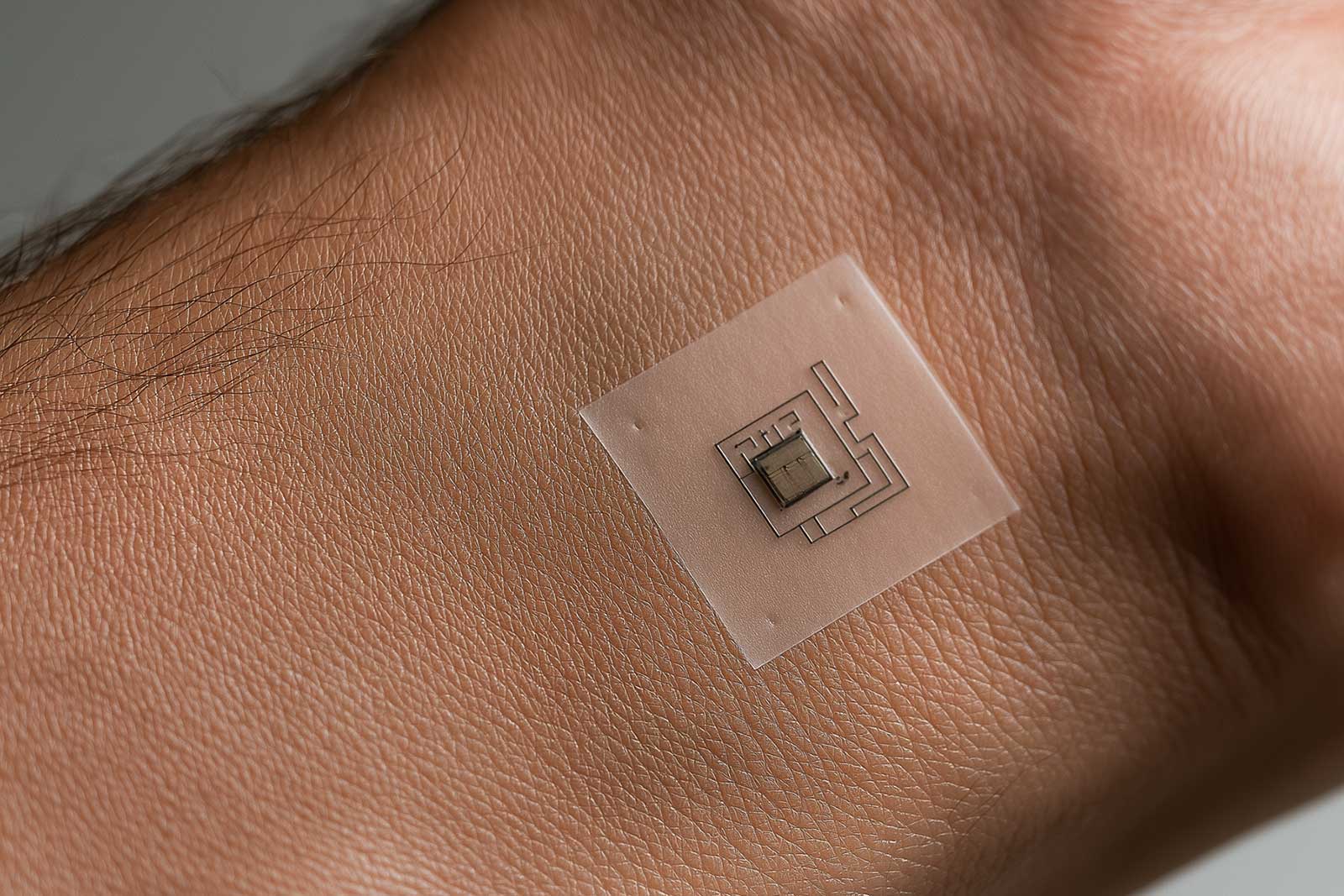
A thin skin-applied biosensor patch with no visible battery or wires
Image · battery-free passive sensing

Shorter stays only work when the care model changes

The pressure to free up beds is not only financial — it is structural. As rural hospital closures concentrate patients into fewer beds, inpatient capacity is something to reserve for the sickest who truly need it. Enhanced Recovery After Surgery pathways cut stays by roughly 1.9 days and complications by about 29% across 74 randomized trials, without raising readmissions or mortality.3 One community-hospital program cut average stay from 3.0 to 2.1 days and projected about $2 million in annual savings.4 Passive monitoring could become part of what makes those freed days safer, but only when paired with a response model clinicians trust.

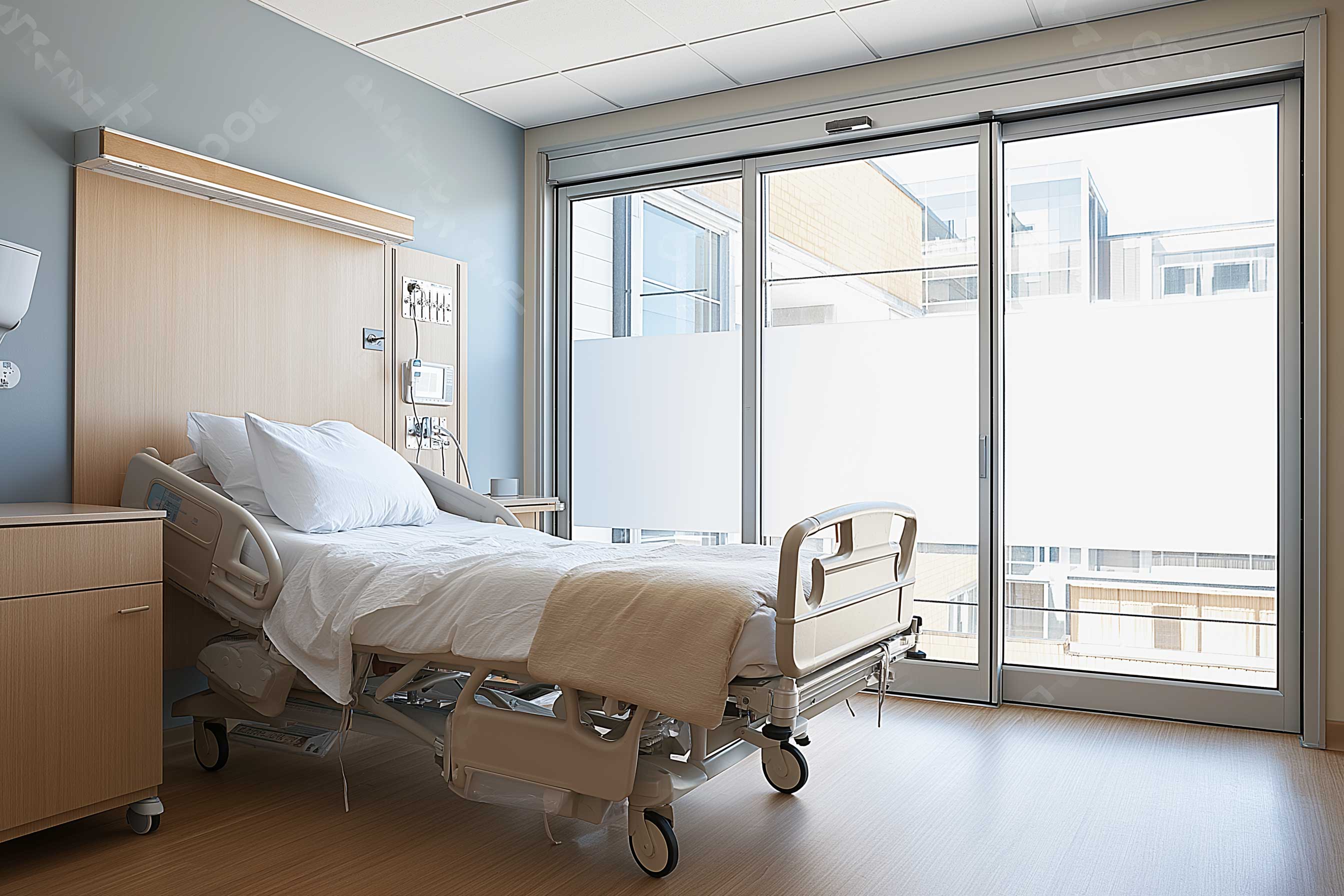
An empty, made hospital bed in a quiet ward
Image · bed capacity as scarce resource

Watching is not the same as responding

A decade of remote-monitoring trials has produced a harder lesson. BEAT-HF, across six academic centers, found no reduction in 180-day readmissions — adjusted HR 1.03.5 EMPOWER, combining daily weights, electronic pill bottles and EHR-integrated alerts, found no reduction in readmission or death despite sustained engagement.6 The lesson is not that monitoring is useless. It is that a monitor, alone, rarely changes an outcome it cannot act on. Data can flow in while responsibility still has nowhere clear to land.

A clinical monitoring dashboard with unaddressed alerts on a screen
Image · data without response

The response pathway is the intervention

When monitoring works, the sensor is rarely enough. In EMPOWER, only about a third of alerts were ever acted on, even with EHR integration.6 Continuous systems routinely fire false or non-actionable alarms at rates between 72% and 99%, eroding the trust the whole system runs on.7 Reviews of effective programs point to the same pattern: monitoring performs better when it is bundled with a response pathway, not deployed as a data feed alone.8 Clinicians trust monitoring when it’s actionable, fits their workflow and augments judgment rather than adding opaque work.9

A nurse reviewing patient monitoring data and making a phone call
Image · the response pathway

Signal vs. noise

The signal is not that home monitoring has finally been solved. The signal is that passive sensing may reduce patient burden while leaving the harder questions intact: who trusts the signal, who acts on it and which patients can safely recover at home. These claims sound similar but deserve different levels of trust.

Signal

Passive sensing is reducing the setup burden

Battery-free and backscatter designs reduce dependence on batteries, powered radios and patient-managed setup.12 The enabling hardware is real, but real hardware is not the same as a reliable care model.

Signal

Structured early discharge can save money and hold outcomes

Enhanced Recovery After Surgery offers strong evidence that shorter stays can be safe and less costly when the care model is redesigned around them — shorter stays, fewer complications and no significant rise in readmission or mortality in the meta-analysis.34

Noise

“The sensor reduces readmissions”

Not on its own. Two major post-discharge heart-failure trials found no reduction in key outcomes from monitoring interventions.56 The response pathway that acts on the signal is the active ingredient, not the device alone.

Noise

“If shorter stays are good, shorter is always better”

Blanket early discharge measurably harms vulnerable patients: one analysis found shortening hernia-surgery stays cut cost but raised readmission and death risk for elderly patients.10 The benefit is selective, not universal.

What would make this real

As of July 2026

Passive post-discharge monitoring already exists in partial, uneven forms: stronger sensors, mixed remote-monitoring outcomes, better-defined early-discharge models and persistent alert fatigue. The question is what would have to change before leaders treat it as a way to safely shorten stays rather than another dashboard no one is built to act on.

WatchpointWhat would change the decisionCurrent status
Passive sensor reliability reaches home-recovery gradeBattery-free and backscatter systems demonstrate dependable data capture through a normal home-recovery day, without proximity, energy harvesting or connectivity becoming the new bottleneck.12EmergingThe physics is promising; continuous real-world reliability is still proximity- and energy-dependent.
A response pathway is built into the modelMonitoring is deployed with a defined escalation pathway — who reviews the alert, how fast and what happens next — rather than a data feed alone.8Not yetEffective programs point to this as a deciding variable, but it is not yet standard.
Alert burden falls to an actionable levelFalse and non-actionable alarms drop far enough that clinicians can trust the signal and act on what comes through.7EarlyFalse-alarm rates of 72–99% remain the core failure mode.
Clinician trust is designed for, not assumedSystems are built to earn trust — actionable signals, workflow integration and clear ownership — instead of pushing raw data at already-stretched teams.9EarlyTrust factors are well described in adjacent digital-monitoring research; they are not yet standard design practice in post-discharge monitoring.
Early-discharge models stay selective, not blanketShorter stays are targeted at patients who can safely recover at home, with the vulnerable protected rather than swept in.10EmergingSafe within structured pathways; harmful when applied universally.
A tight actionable-signal loop proves the adjacent logicA monitoring model closes the loop from signal to action so consistently that outcomes improve at scale in an adjacent category.11Mature adjacentContinuous glucose monitoring is the standout adjacent category: the signal is actionable, the loop is clearer and the care model is more mature than post-discharge monitoring.

How to build readiness

1Buy the response system, not just the sensor

The escalation pathway — who sees the alert, how fast and what they do next — is where outcomes are most likely to change. A data feed without that pathway repeats the weakest part of earlier remote-monitoring models.

2Design for trust before scale

Clinicians act on signals they trust. That means actionable alerts, real workflow integration and clear ownership built in from day one — not a raw data stream pushed at an already-stretched team, where alert fatigue and quiet abandonment begin.

3Target early discharge, don’t generalize it

The cost and capacity opportunity is real for selected patients and dangerous when generalized. Build the criteria for who can safely recover at home — and just as importantly, who cannot — before shortening anyone’s stay.

4Judge success by “no worse, sooner”

The honest bar is not miracle improvement. It is the same or better recovery, earlier and less expensively, with safety held constant. Measure against that and passive monitoring has a real job. Measure against “fewer readmissions from the sensor alone” and it will disappoint.

The futurist’s take

The sensor was never the hard part.
Earning the right to stay close is.

A decade of remote monitoring taught an expensive lesson: better hardware does not, by itself, produce better outcomes. Passive sensing may remove some of the burden from patients, but the thing that makes earlier discharge safe has never been the device alone. It is a clinician who trusts the signal and a system built to act on it.

The organizations that get this right will not simply add more monitoring. They will build the response pathway first, earn the trust that makes it usable and treat restraint — knowing when to stay quiet — as seriously as responsiveness. The question is not how much they can watch. It is how wisely they use the right to stay close.

From evidence to artifact

See how we used disciplined imagination to turn weak signals into a tangible artifact from the future.

References

  1. Lin et al. (2020). Wireless battery-free body sensor networks using near-field-enabled clothing. doi:10.1038/s41467-020-14311-2
  2. Feng et al. (2023). WiSensor: Passive Sensor Data Transmission by Way of Ambient Wi-Fi Channels. doi:10.1109/jiot.2022.3230556
  3. Sauro et al. (2024). Enhanced Recovery After Surgery Guidelines and Hospital Length of Stay, Readmission, Complications and Mortality. doi:10.1001/jamanetworkopen.2024.17310
  4. Blumenthal et al. (2024). A Retrospective Comparison Trial Investigating Aggregate Length of Stay Following Implementation of an Enhanced Recovery After Surgery Program. doi:10.3390/jcm13195847
  5. Ong et al. (2016). Effectiveness of Remote Patient Monitoring After Discharge of Hospitalized Patients With Heart Failure: The BEAT-HF Randomized Clinical Trial. doi:10.1001/jamainternmed.2015.7712
  6. Asch et al. (2022). Remote Monitoring and Behavioral Economics in Managing Heart Failure in Patients Discharged From the Hospital (EMPOWER). doi:10.1001/jamainternmed.2022.1383
  7. Sendelbach and Funk (2013). Alarm Fatigue: A Patient Safety Concern. doi:10.1097/nci.0b013e3182a903f9
  8. Teleanu et al. (2025). Remote Monitoring of Patients with Heart Failure: Characteristics of Effective Programs. doi:10.2147/vhrm.s521952
  9. Ball et al. (2025). Perspectives on Digital Remote Monitoring: Determinants of Clinician Trust and Adoption. doi:10.1093/schbul/sbaf043
  10. Catena et al. (2019). On the tension between standardized and customized policies in health care: The case of length-of-stay reduction. doi:10.1002/joom.1016
  11. Kwon et al. (2025). Advances in Continuous Glucose Monitoring: Clinical Applications. doi:10.3803/enm.2025.2370
Additional references
  1. Farahani et al. (2025). Impact of remote biometric sensing on readmission risk and mortality after hospital discharge. doi:10.1002/jhm.70224
  2. Dawson et al. (2021). Home Telemonitoring to Reduce Readmission of High-Risk Patients: a Modified Intention-to-Treat Randomized Clinical Trial. doi:10.1007/s11606-020-06589-1
  3. Daly et al. (2025). Effect of post-discharge symptom monitoring on hospital readmissions in oncology. doi:10.1200/jco.2025.43.16_suppl.1514
  4. Lobdell et al. (2024). Remote Perioperative Monitoring in Adult Cardiac Surgery: The Impact on Readmission. doi:10.1016/j.atssr.2024.06.018
  5. Bisch et al. (2020). Outcomes of enhanced recovery after surgery (ERAS) in gynecologic oncology. doi:10.1016/j.ygyno.2020.12.035
  6. Noba et al. (2020). Enhanced Recovery After Surgery (ERAS) Reduces Hospital Costs and Improves Clinical Outcomes in Liver Surgery. doi:10.1007/s11605-019-04499-0
  7. Leong et al. (2021). Comparison of Hospital-at-Home models: a systematic review of reviews. doi:10.1136/bmjopen-2020-043285
  8. Downey et al. (2018). The impact of continuous versus intermittent vital signs monitoring in hospitals: A systematic review and narrative synthesis. doi:10.1016/j.ijnurstu.2018.04.013

The next hard question is coming.

Let’s make sure you have somewhere to take it.

Start a conversation