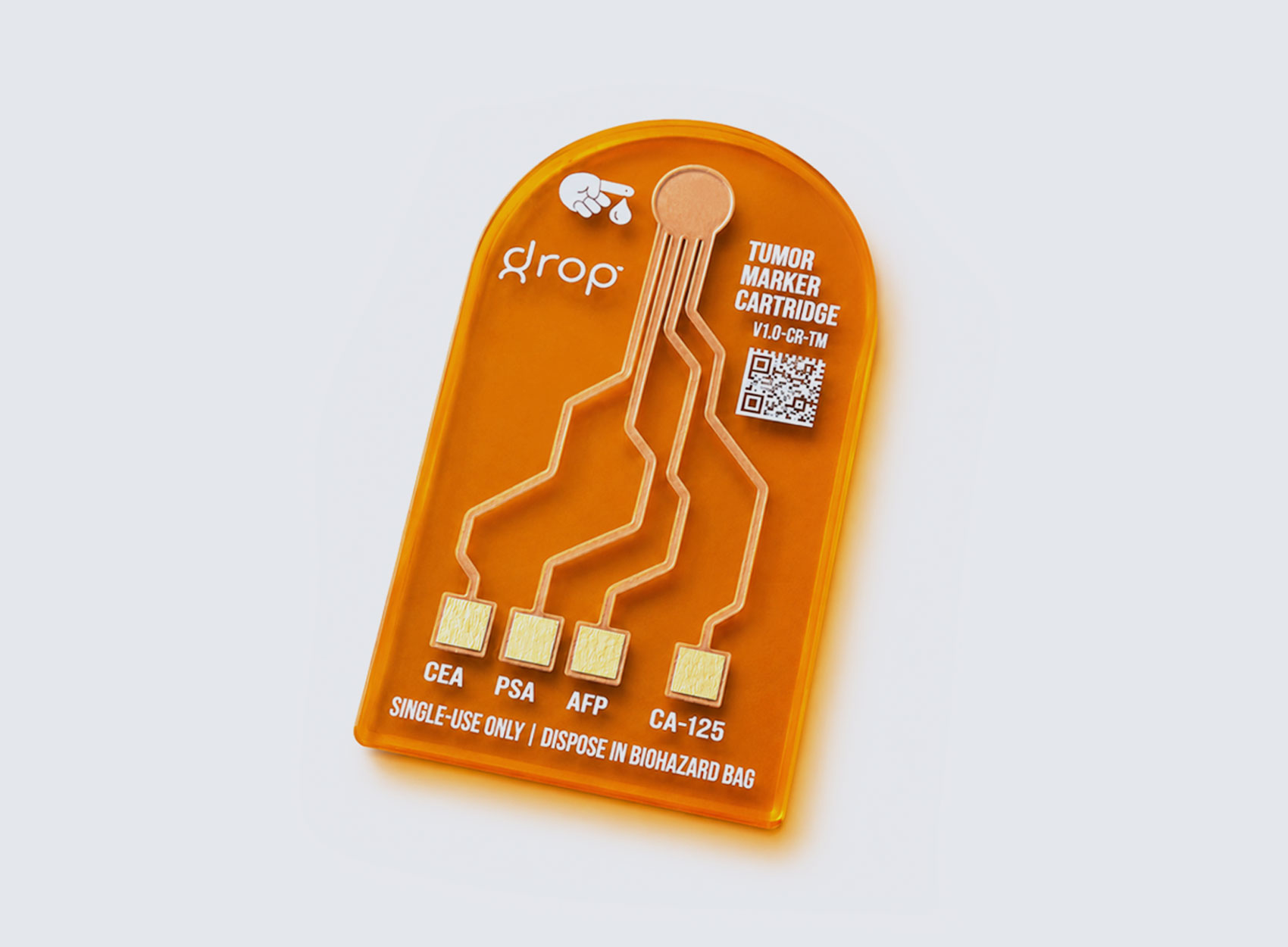
H-01.03 / artifact
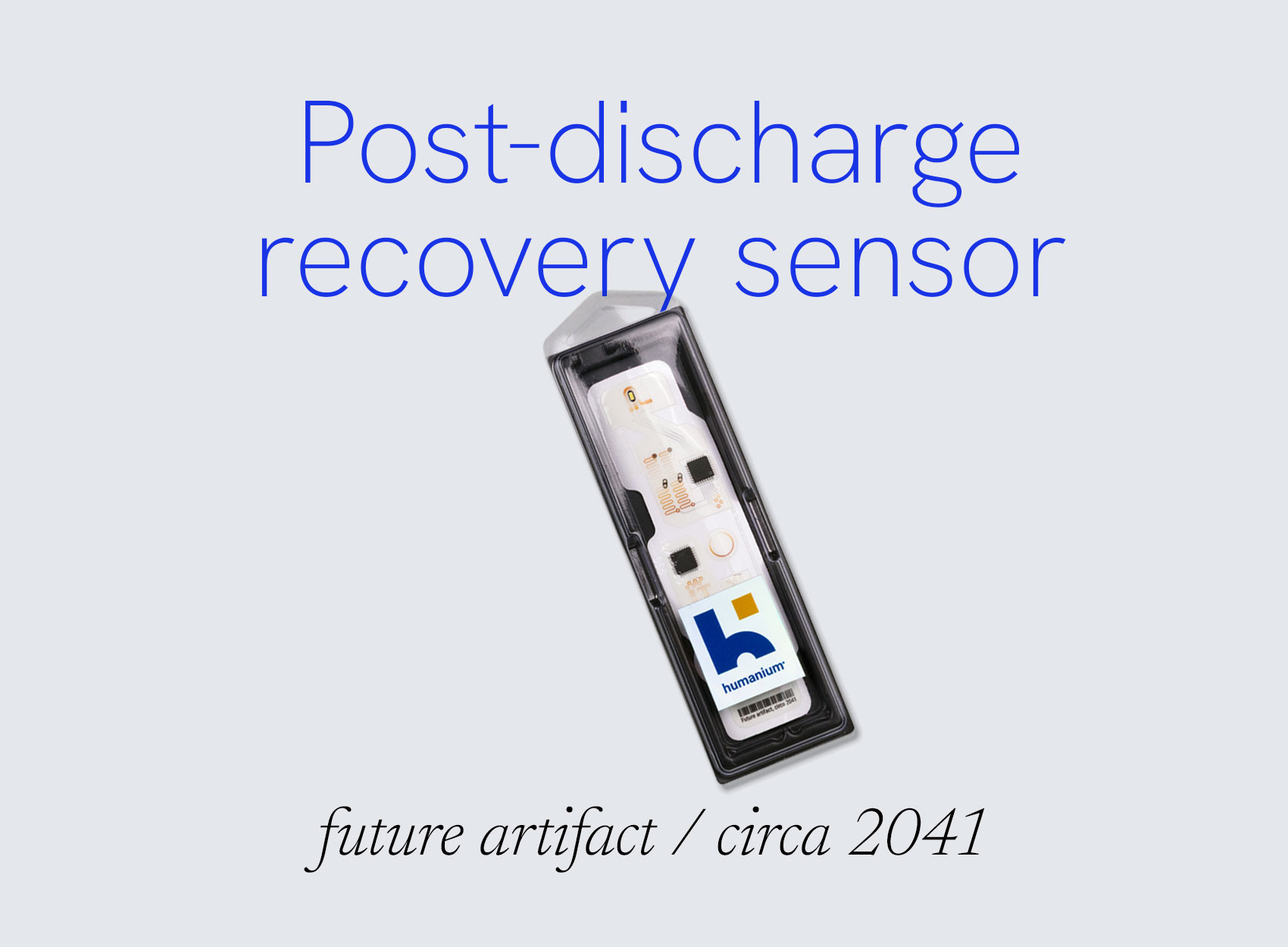
Passive recovery monitoring after hospital discharge
Discharge used to mark the edge of care. This made it feel more like a change in place.
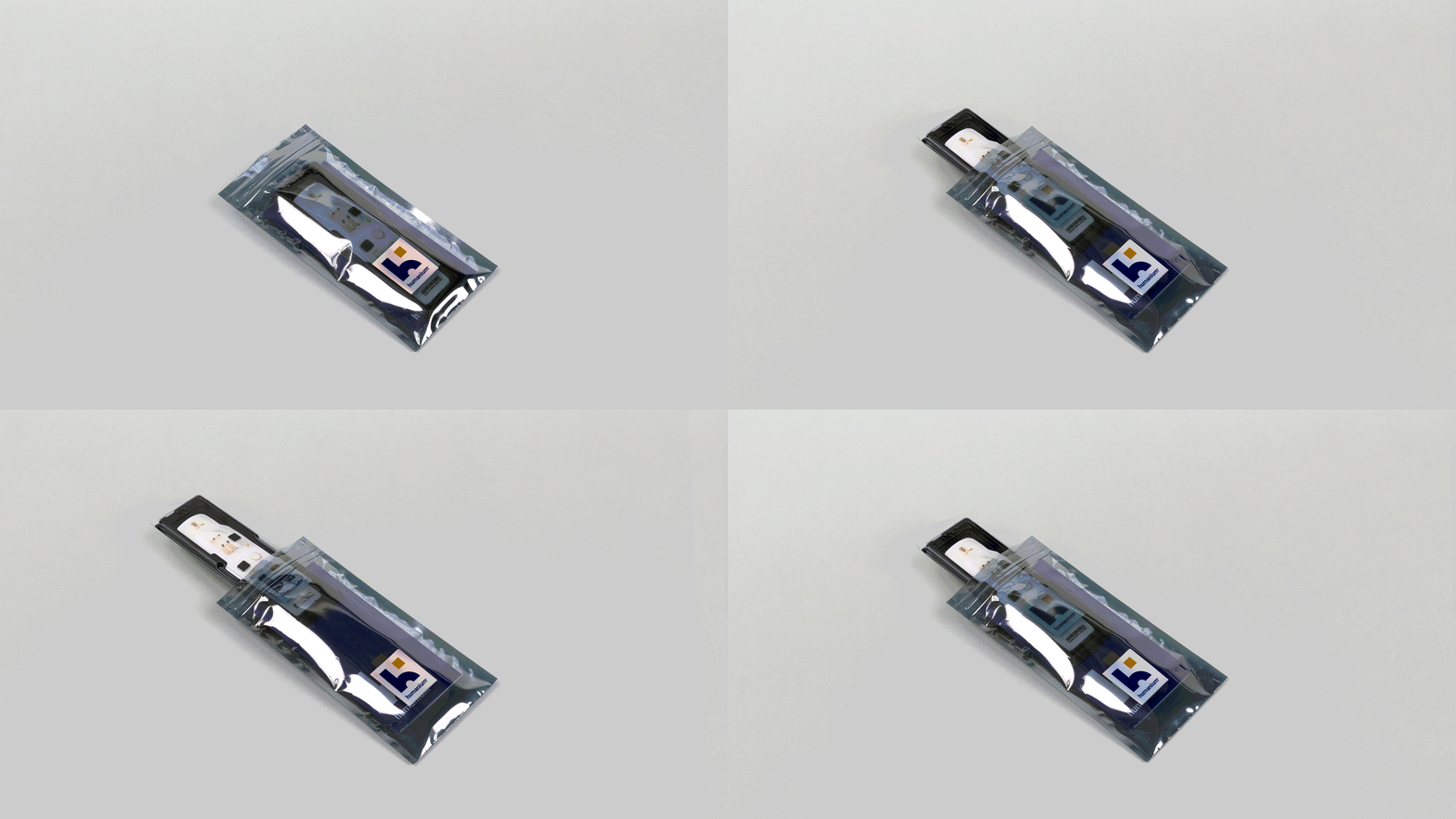
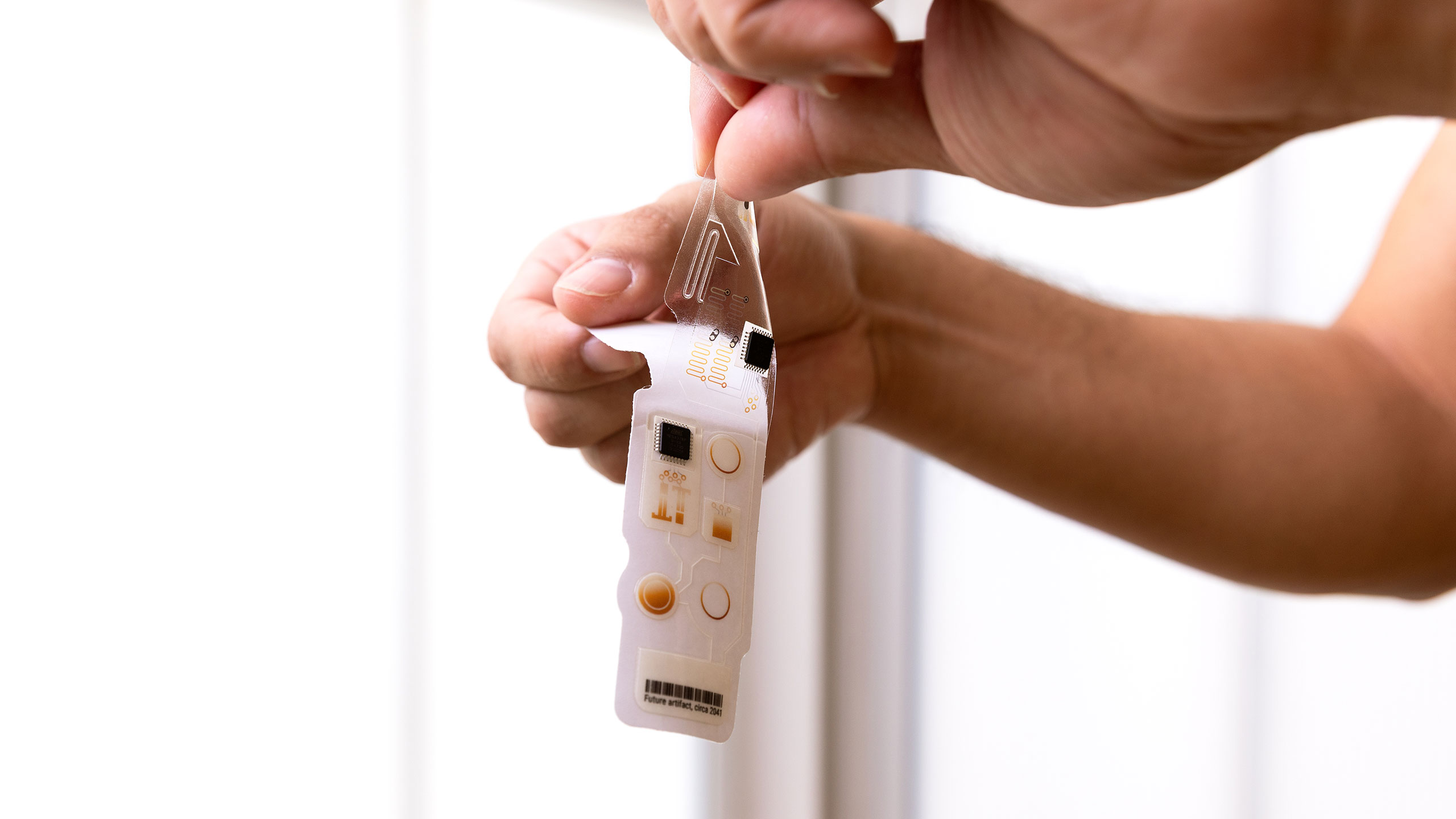
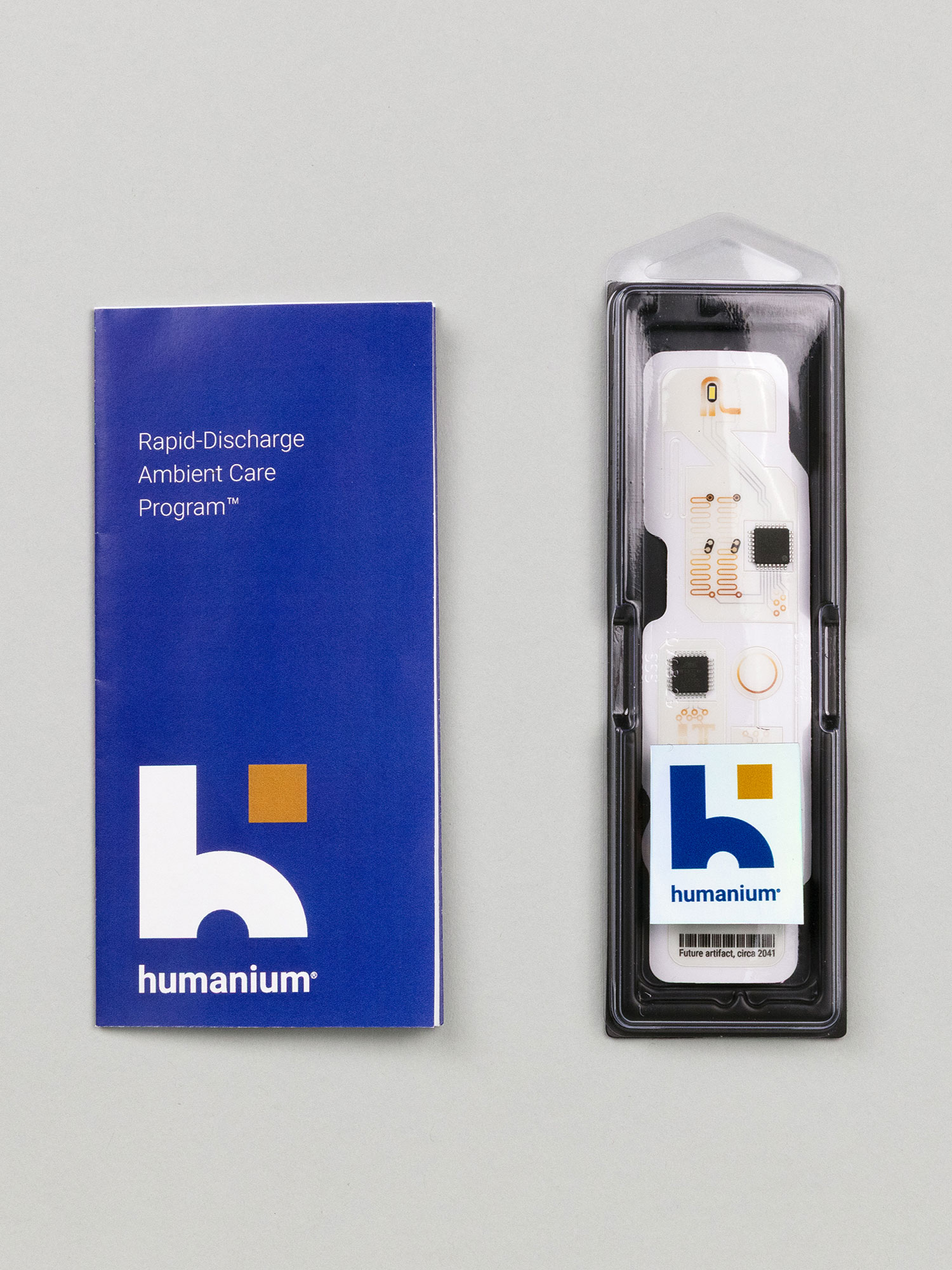
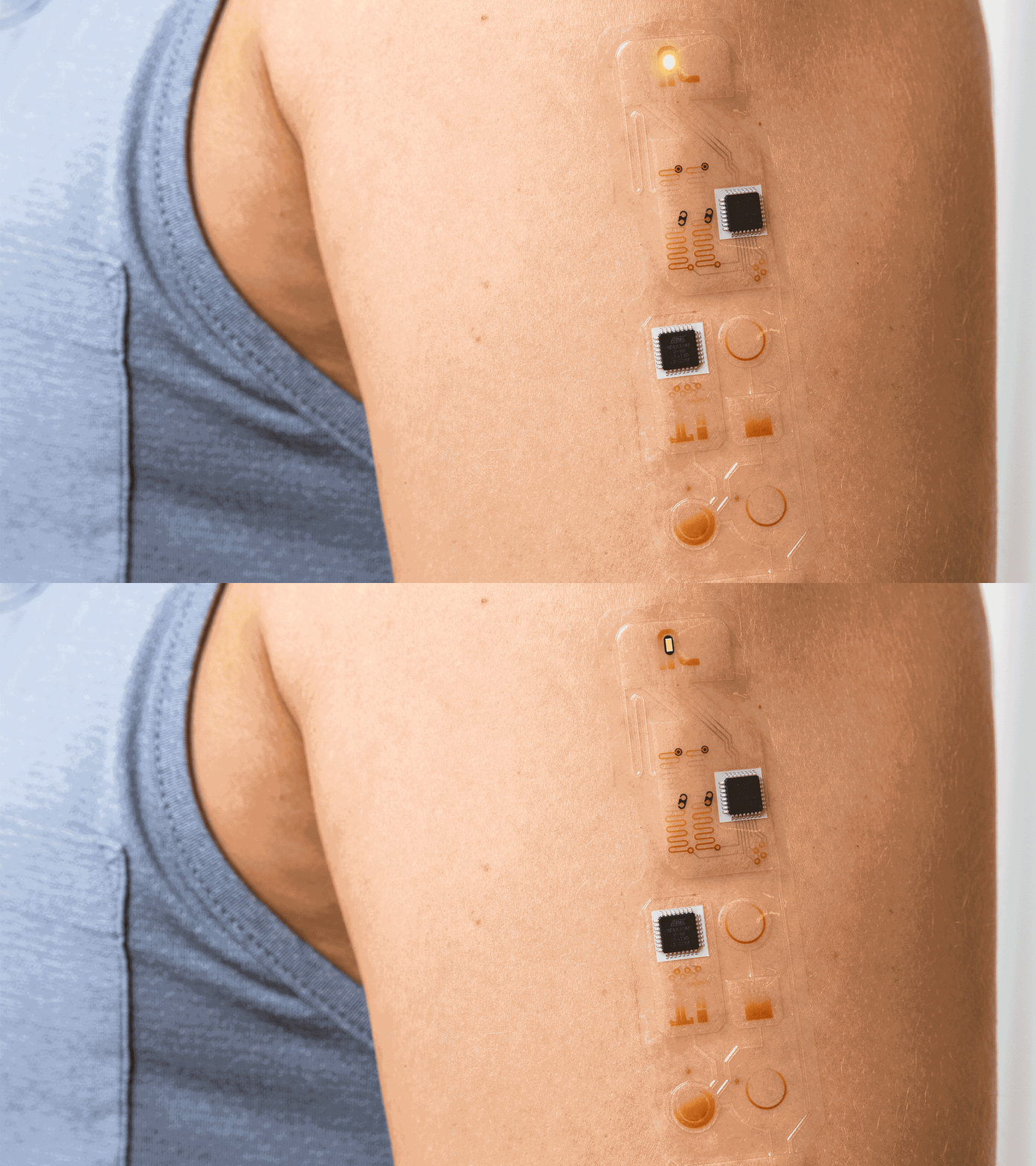
The biosensor was part of an early ambient care kit used after high-risk hospital discharges. Applied to the skin before the patient left, it monitored key recovery signals for the first 72 hours at home.
It did not ask patients to check in, charge a device or manage another screen. It extended the care environment beyond the hospital wall.
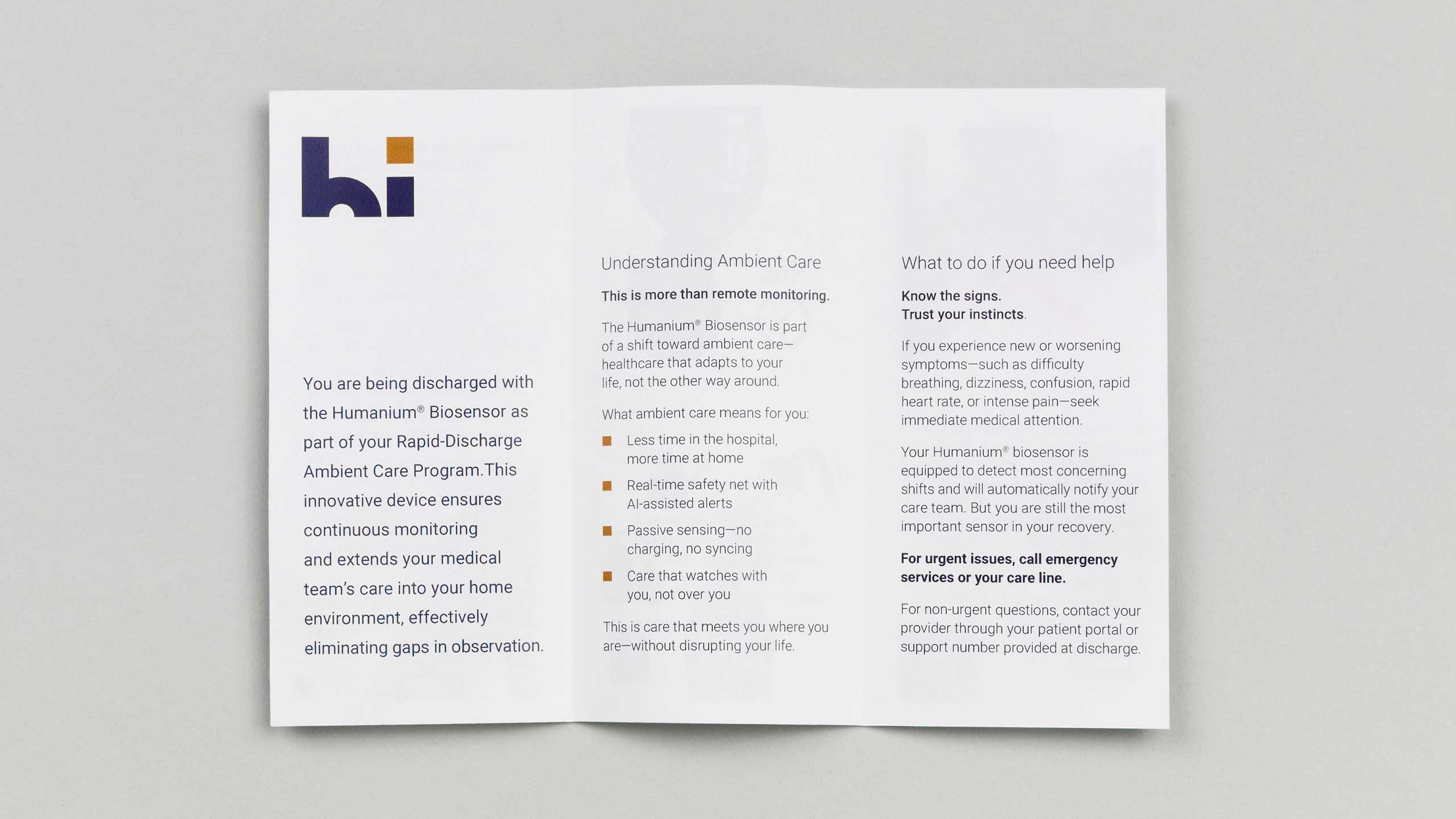
For patients, the shift was subtle but meaningful: leaving the hospital no longer meant leaving the system’s attention. Care changed location. It did not disappear.

This small biosensor marked a larger shift in care: discharge stopped being the edge of the system and became a change in terrain. The patient moved home. The care did not end.

Continuity is becoming a new measure of trust.
As care moves beyond the walls of the institution, the boundary between service and presence starts to change.
For healthcare leaders, this creates a new kind of responsibility. It is no longer enough to discharge someone with instructions, schedule a follow-up and hope the handoff holds. Patients increasingly expect the system to stay connected across the vulnerable space between hospital, home and recovery.
The opportunity is to make that connection feel human, not heavy.
The organizations that get this right will not simply add more monitoring. They will redesign how support shows up: when to intervene, when to stay quiet, how to explain what is being watched and how to make people feel accompanied instead of managed.
That shift matters far beyond post-discharge care. As more services become predictive, ambient and always-on, trust will come from restraint as much as responsiveness.
The question is not how much organizations can see. It is how wisely they use the right to stay close.
See the evidence behind this artifact ↗