Future Artifacts

Signals from the edge

The body is becoming something medicine can redesign.

Published July 2, 2026

Organ redesign is not one technology. It includes gene-edited animal organs, engineered tissues, stem-cell-derived replacement cells and surgeries that deliberately change how an organ system works. In 2025, FDA-cleared trials moved gene-edited pig kidneys beyond one-off exceptions.1 Stem-cell-derived islet therapy is also beginning to replace pancreatic function in some patients, though it remains investigational.5 The foresight question is which forms become safe, durable, regulated and trusted enough to scale.

In 2025, FDA-cleared trials moved pig kidneys beyond one-off exceptions

For years, pig kidney xenotransplants in living patients happened through individual expanded-access cases. In 2025, the FDA cleared investigational clinical trials for gene-edited pig kidneys from United Therapeutics and eGenesis, using source pigs with 10 and 69 gene edits, respectively.1 United Therapeutics’ kidney includes an inactivated porcine gene associated with organ growth, so the transplanted kidney is designed not to keep growing inside a human body. That is more than substitution. It is an early form of biological redesign.
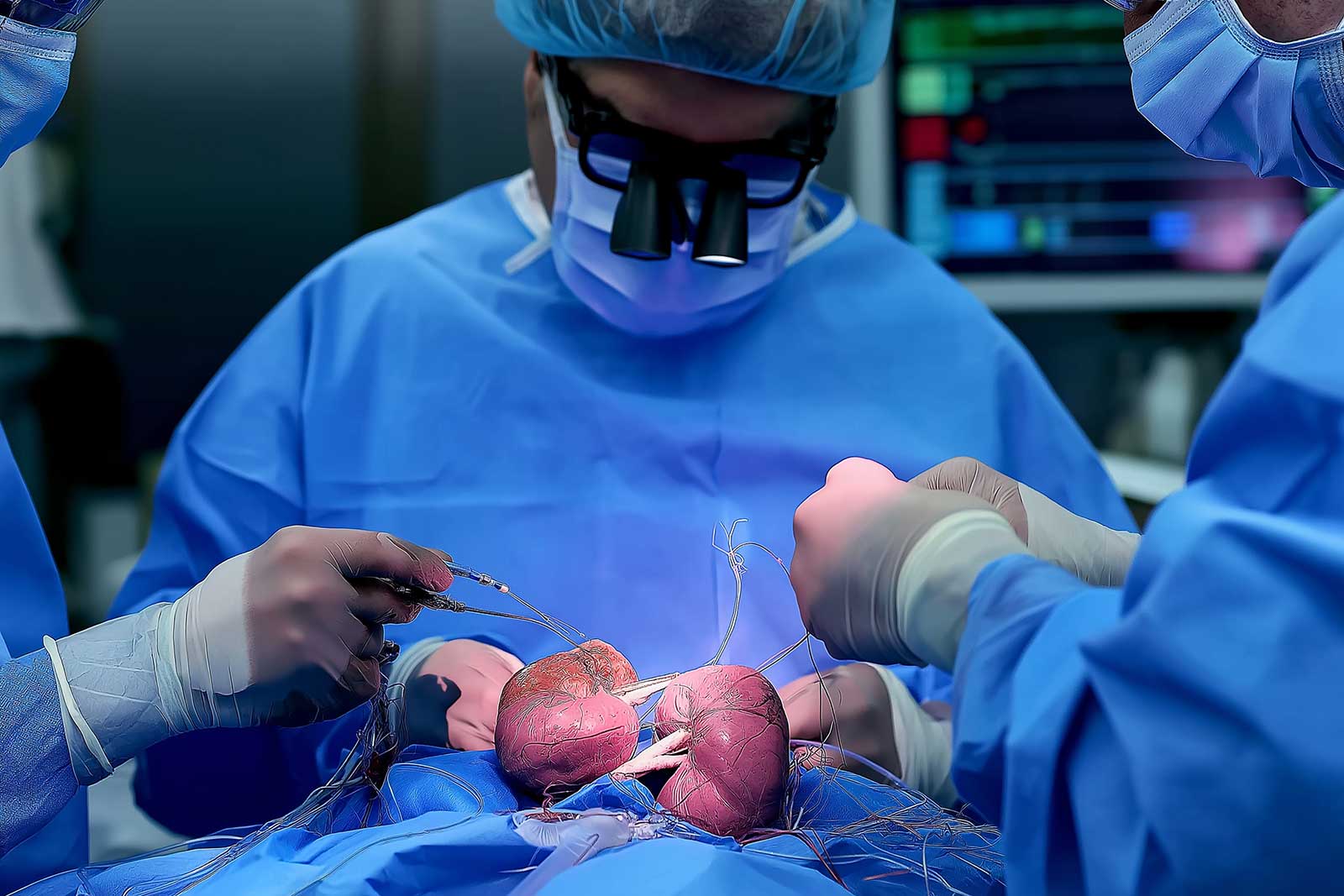
A surgical team preparing for a transplant procedure in a clinical operating room
Image · regulated xenotransplant trials

The first pig heart case showed why safety is not one problem

The first patient to receive a genetically modified pig heart survived 61 days.2 Later analyses identified several possible contributors to graft failure, including evidence of porcine cytomegalovirus, a latent pig virus that may have contributed to dysfunction despite donor screening.3 A separate decedent study found two gene-edited pig kidneys stayed viable for 74 hours with no hyperacute rejection, but did not recover full filtration function.6 Genuine progress. A genuine reminder that “no rejection” and “working organ” are not the same claim.

A laboratory technician examining a sample under controlled clinical conditions
Image · the screening gap

Some organ redesign has surgical precedents hiding in plain sight

Not every form of organ redesign begins with gene editing. Some precedents already exist in surgery, where anatomy is deliberately rearranged to change function.4 The Ross procedure moves a patient’s pulmonary valve into the aortic position. Dynamic cardiomyoplasty explored repurposing skeletal muscle to assist the heart. Metabolic gastric bypass reorganizes the gut in ways that alter endocrine and metabolic signaling, not only stomach size. These are not engineered replacement organs. They are useful reminders that redesign can arrive through established procedures before it arrives as a manufactured organ.

Anatomical surgical diagrams laid out on a clinical desk
Image · redesign already in practice

Stem-cell-derived islet therapy is beginning to replace organ function

In a Vertex-led Type 1 diabetes trial, 14 patients received stem-cell-derived insulin-producing islet cells; all met the primary endpoint, and 10 of the 12 full-dose participants followed for a full year no longer needed insulin.5 That therapy remains investigational and requires immunosuppression. A separate hypoimmune cell-therapy approach has shown short-term function without immunosuppression, but it is much earlier. Neither result is a whole pancreas. Both are evidence that engineered cells can begin to replace what a failing organ used to do.

A laboratory vial of cultured cells under sterile clinical lighting
Image · engineered tissue therapy

Signal vs. noise

The signal is not that replacement organs are ready to scale. The signal is that several parts of organ redesign are crossing different thresholds: regulated xenotransplant trials, short-term organ function, surgical precedent, engineered cell therapy and unresolved safety obligations. These claims sound similar but deserve different levels of trust.

Signal

Public support can be favorable, but it is not simple

In South Korea, 72.9% of surveyed adults were positive toward xenotransplantation, and 64.4% agreed with genetically modified pigs as an organ source.8 But the same field also raises concerns about infection risk, animal welfare, identity and lifelong monitoring. Support is real, but it depends on context, risk and need.

Signal

Immune-evasion strategies are becoming part of the design brief

The hypoimmune islet-cell work suggests one possible route toward engineered cells that can function without systemic immunosuppression, but it remains early.5 The signal is not that immune suppression has been solved. The signal is that avoiding it is becoming an explicit design goal.

Noise

“Engineered organs” is one maturity curve

Xenotransplantation, stem-cell islets, 3D bioprinted tissue, organoids and surgical redesign are moving at different speeds. Treating them as one field hides the practical question leaders need to ask: which biological function is being replaced, and by what kind of intervention?

Noise

“No rejection” means the treatment worked

Two gene-edited pig kidneys showed no hyperacute rejection for 74 hours in a decedent study — and never recovered full filtration function either.6 Absence of rejection and presence of function are different questions.

Noise

Patients can simply change their mind later

Consent is genuinely constrained here: xenotransplant recipients accept lifelong infection surveillance and contact tracing as a condition of the procedure, which limits how freely they can later withdraw.9

What would make this real

As of July 2026

Engineered organ replacement exists in pieces: regulated xenotransplant trials, short-term pig-organ function, engineered cells that can replace some pancreatic function and bioprinting research that still has major scale barriers. The question is what would have to change before a leader should treat this as active clinical and strategic disruption rather than a distant research story.

WatchpointWhat would change the decisionCurrent status
Xenotransplant survival extends from months to yearsA gene-edited pig organ functions in a living patient for years, not months, with manageable rejection, infection and surveillance burden.2Not yetBy late 2025, pig-kidney survival had reached many months in living patients, but not years.
A mature pathway for engineered organ productsXenotransplants, engineered tissues and bioprinted organs have clearer product-specific regulatory expectations instead of being handled through a patchwork of biologic, device, combination-product and trial-specific frameworks.10EarlyXenotransplantation has FDA guidance and IND pathways, but no mature pathway covers the full engineered-organ category.
Bioprinted or organoid organs solve the vascularization bottleneckA bioprinted or organoid-derived organ sustains its own blood supply at full human-organ scale, not just in small tissue constructs.11Not yetNamed as the central unresolved barrier across the field.
Public knowledge catches up to public opinionAwareness of what xenotransplantation actually involves rises to match the moderately favorable attitudes surveys already find.7EarlyAbout half of U.S. respondents report low or no knowledge of it.
Equity policy is built before the technology scales, not afterAccess rules for engineered organs are set while supply is still limited, rather than left to emerge once demand is already unmanageable.9Not yetNamed as a risk in the literature; no policy yet addresses it directly.
Engineered cell therapy extends beyond isletsStem-cell-derived or hypoimmune replacement cells demonstrate durable function in a second organ system, without requiring a whole-organ replacement.5EmergingIslet-cell therapy is the clearest clinical signal; broader replication remains early.

How to build readiness

1Track the regulatory path, not just the headline

Whether an intervention is treated as a xenotransplant, biologic, device, cell therapy or combination product shapes its timeline, evidence burden, cost and operating model. The regulatory path is often a better leading indicator than the scientific headline.

2Separate “no rejection” from “working organ” in every progress report

The two claims get conflated constantly, and they measure different things. A xenotransplant can clear the first bar and still fail the second.

3Build equity policy alongside the technology, not after it scales

Early engineered organs will be scarce and expensive by default. Access rules set after that scarcity is already normalized are much harder to change.

4Watch the redesign already happening in plain sight

The Ross procedure and metabolic gastric bypass are not engineered organs, but they are useful precedents for how anatomy can be deliberately rearranged to change function. The future may not arrive first as a lab-grown organ. It may arrive as a set of practices that make redesign feel clinically ordinary.

The futurist’s take

Organ redesign didn’t arrive as one breakthrough.
It arrived as a gene edit, a virus, an insulin cell and no name for any of it.

The most advanced version of this future is not a lab-grown heart. It is a set of partial thresholds: a cleared xenotransplant trial, a virus that exposed the limits of screening, an insulin-producing cell therapy and surgeries that already change organ-system function without using futuristic language.

The organizations that get this right will not wait for one dramatic breakthrough. They will track the pieces across transplant surgery, endocrinology, regenerative medicine, bioengineering and ethics before those pieces harden into a new clinical category.

From evidence to artifact

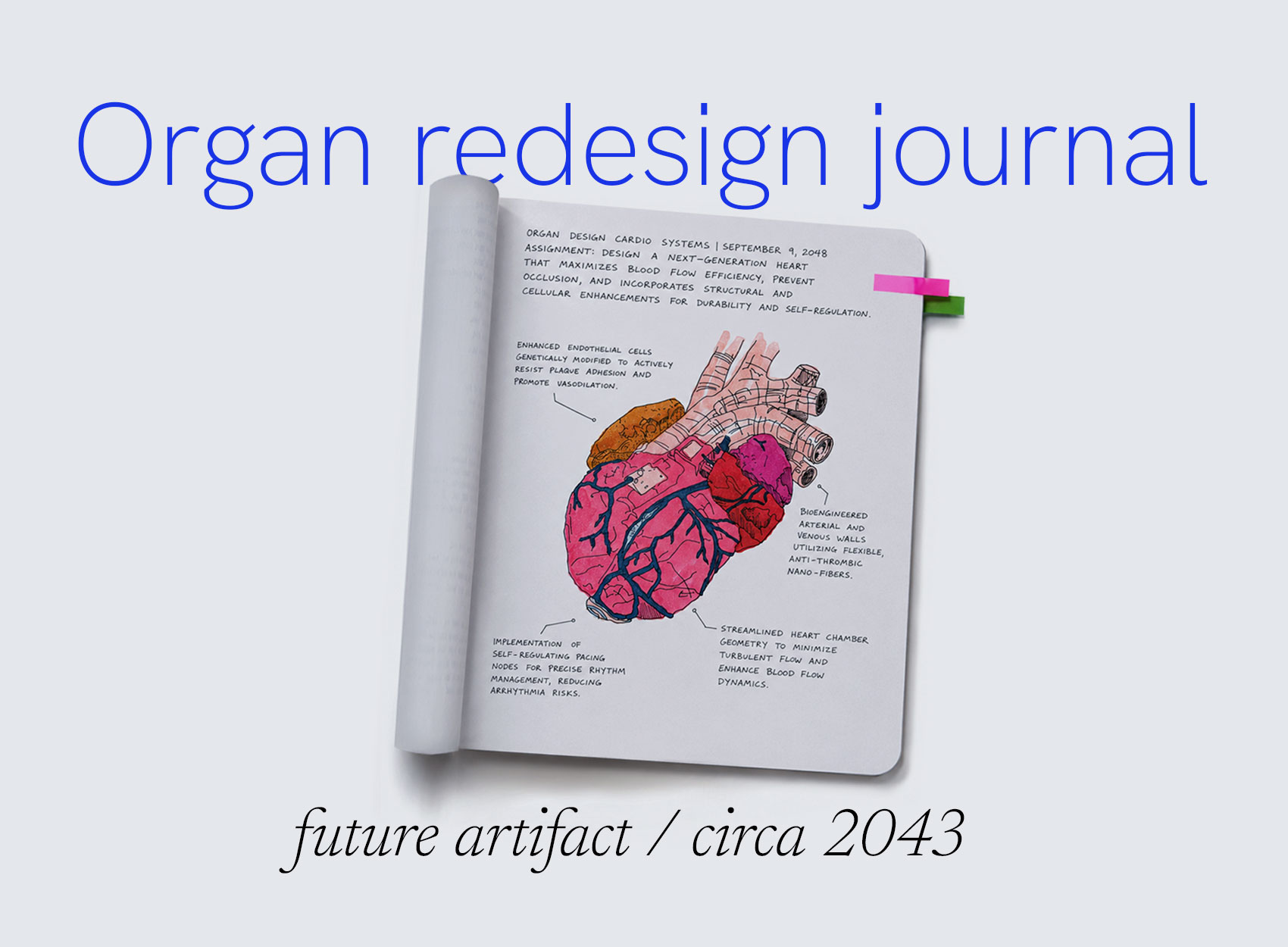
See how we used disciplined imagination to turn weak signals into a tangible artifact from the future.

References

  1. Meier et al. (2025). International Xenotransplantation Association (IXA) Position Paper on Kidney Xenotransplantation. doi:10.1111/xen.70003
  2. Sucu et al. (2025). Liver Xenotransplantation: A Path to Clinical Reality. doi:10.3389/ti.2024.14040
  3. Li et al. (2026). Organ Transplantation: Current Status, Challenges, and Future Prospects. doi:10.1002/mco2.70567
  4. Ashrafian (2010). Auto-bionics – a new paradigm in Regenerative Medicine and Surgery. doi:10.2217/rme.10.2
  5. Berney et al. (2026). The Top 12 Most Impactful Papers in Clinical Transplantation in 2025: TI Editors’ Choice. doi:10.3389/ti.2026.16247
  6. Porrett et al. (2022). First clinical-grade porcine kidney xenotransplant using a human decedent model. doi:10.1111/ajt.16930
  7. Padilla et al. (2024). Public Attitudes to Xenotransplantation: A National Survey in the United States. doi:10.1016/j.ajt.2024.07.018
  8. Jeon et al. (2025). Public Attitudes Toward Xenotransplantation in South Korea: A 2023 Survey Study. doi:10.1111/xen.70051
  9. Khush et al. (2024). Research Opportunities and Ethical Considerations for Heart and Lung Xenotransplantation Research. doi:10.1016/j.ajt.2024.03.015
  10. Schuurman (2020). Solid organ xenotransplantation at the interface between research and clinical development: Regulatory aspects. doi:10.1111/xen.12608
  11. Peired et al. (2020). Bioengineering strategies for nephrologists: kidney was not built in a day. doi:10.1080/14712598.2020.1709439
Additional references
  1. Rodger et al. (2024). Exploring attitudes toward xenotransplantation: A scoping review of healthcare workers, healthcare students, and kidney patients. doi:10.1111/xen.12860
  2. Syd (2022). Existing Ethical Tensions in Xenotransplantation. doi:10.1017/s0963180121001055
  3. Baldussu (2025). Cross-Species Boundaries and Human Rights: Legal and Ethical Reflections on Xenotransplantation. doi:10.12681/bioeth.42845
  4. Kim et al. (2026). Bioprinting and assembly of organ building blocks for tissue engineering applications. doi:10.1016/j.mtbio.2026.102842
  5. Jeon et al. (2024). 3D digital light process bioprinting: Cutting-edge platforms for resolution of organ fabrication. doi:10.1016/j.mtbio.2024.101284
  6. Li et al. (2021). Decellularization of porcine whole lung to obtain a clinical-scale bioengineered scaffold. doi:10.1002/jbm.a.37158
  7. Li et al. (2024). Bioactive scaffolds for tissue engineering: A review of decellularized extracellular matrix applications and innovations. doi:10.1002/exp.20230078
  8. Rodger et al. (2023). Xenotransplantation: A historical–ethical account of viewpoints. doi:10.1111/xen.12797

The next hard question is coming.

Let’s make sure you have somewhere to take it.

Start a conversation