H-01.02 / artifact
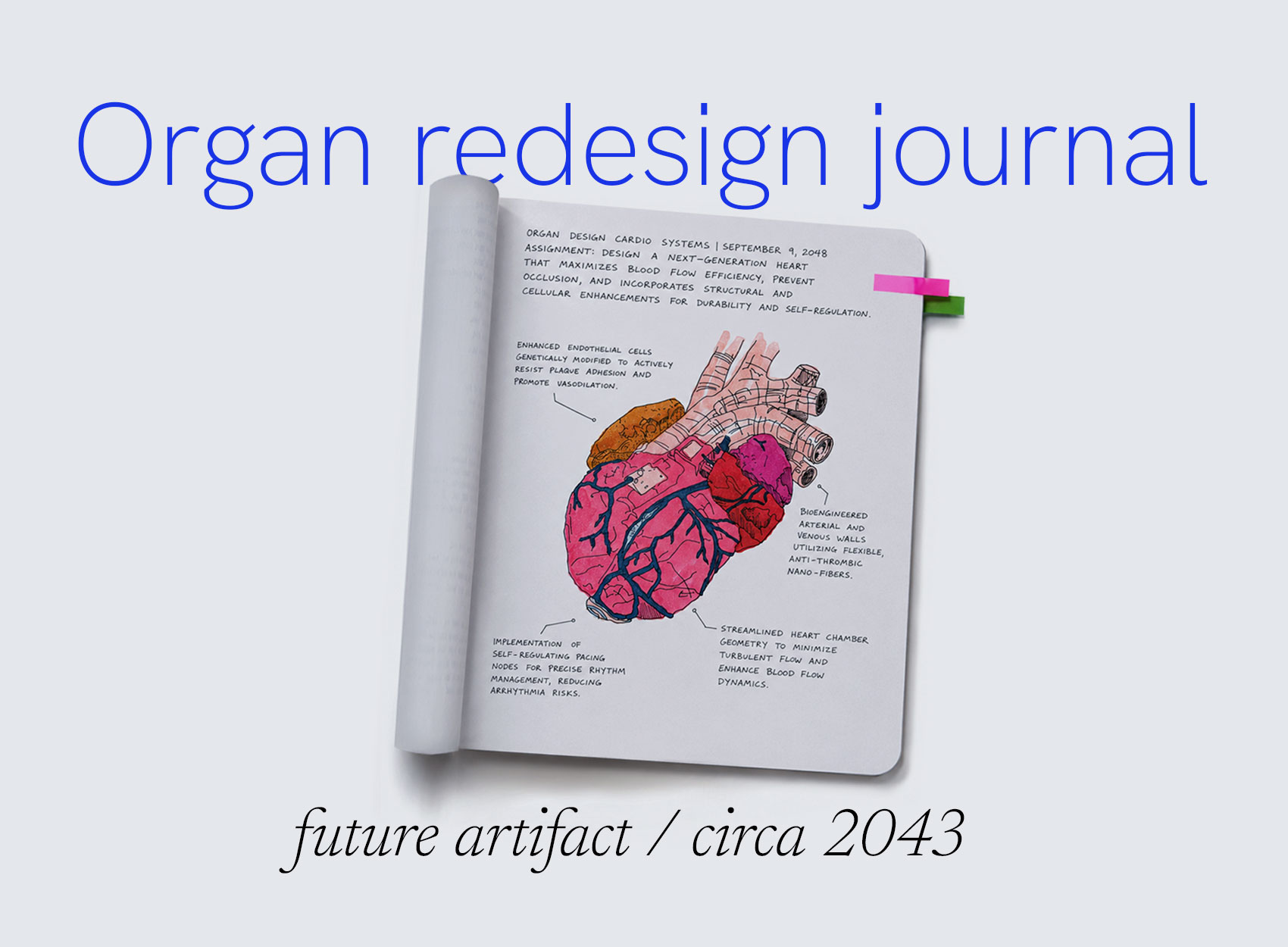
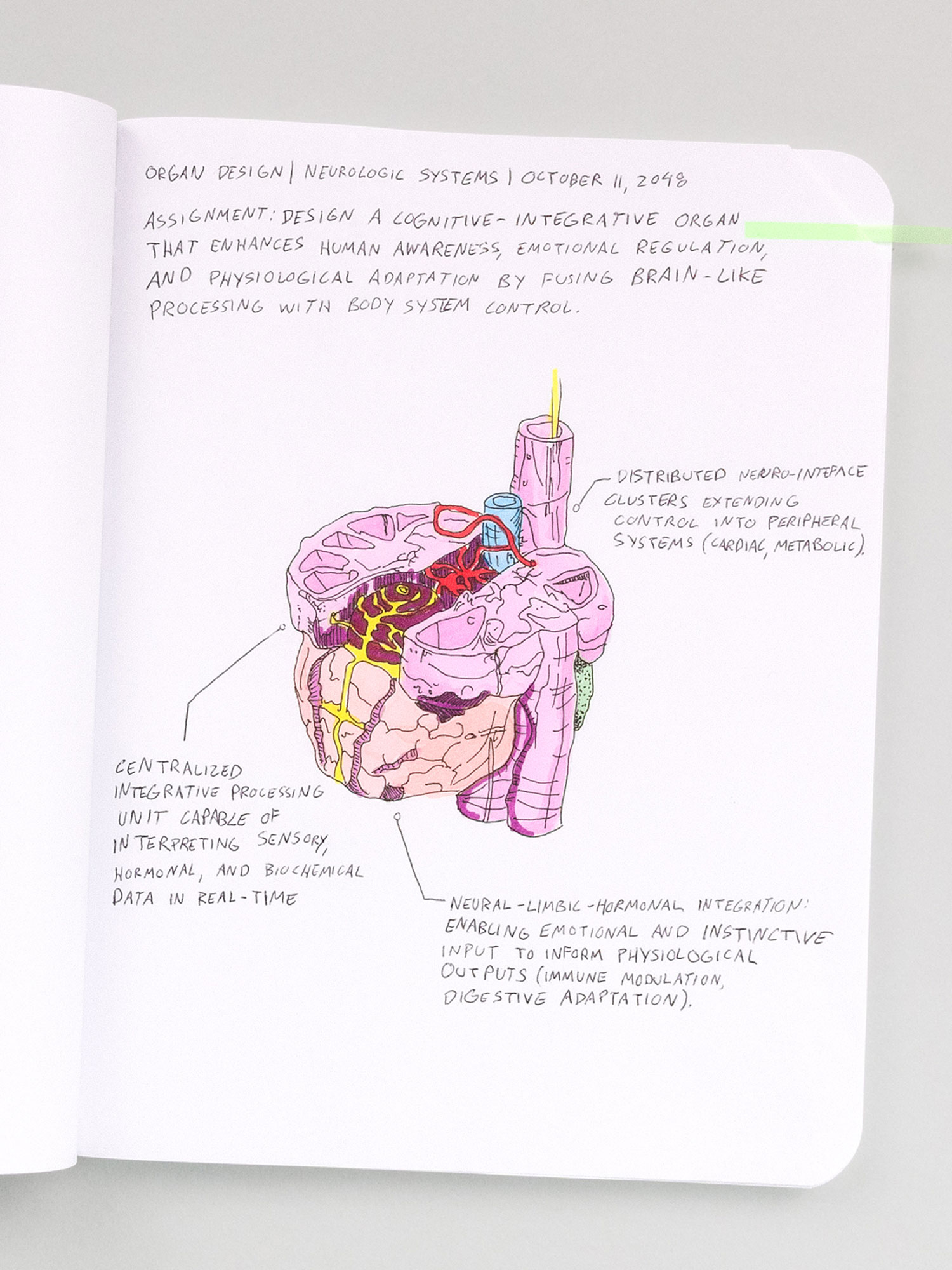
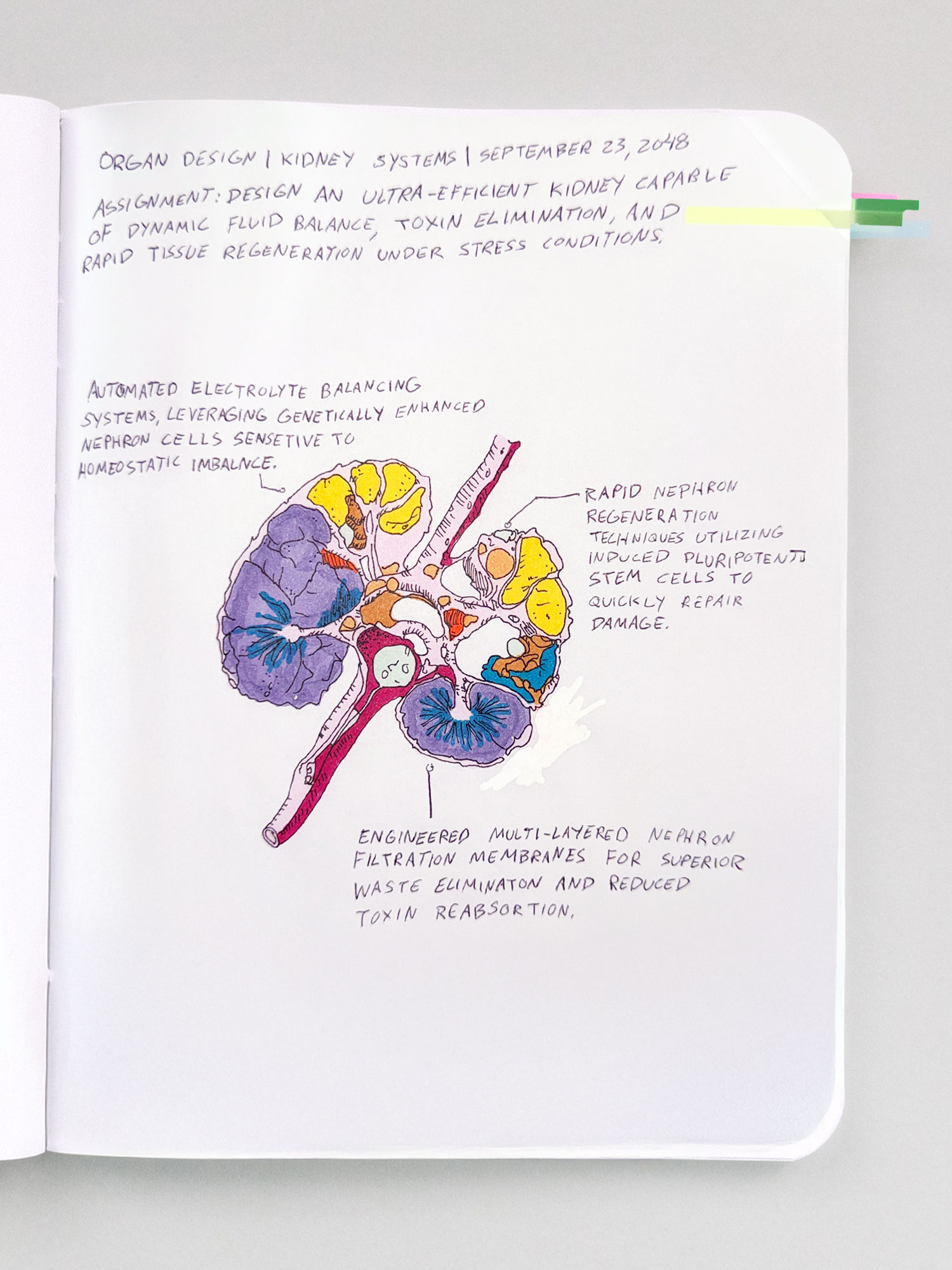
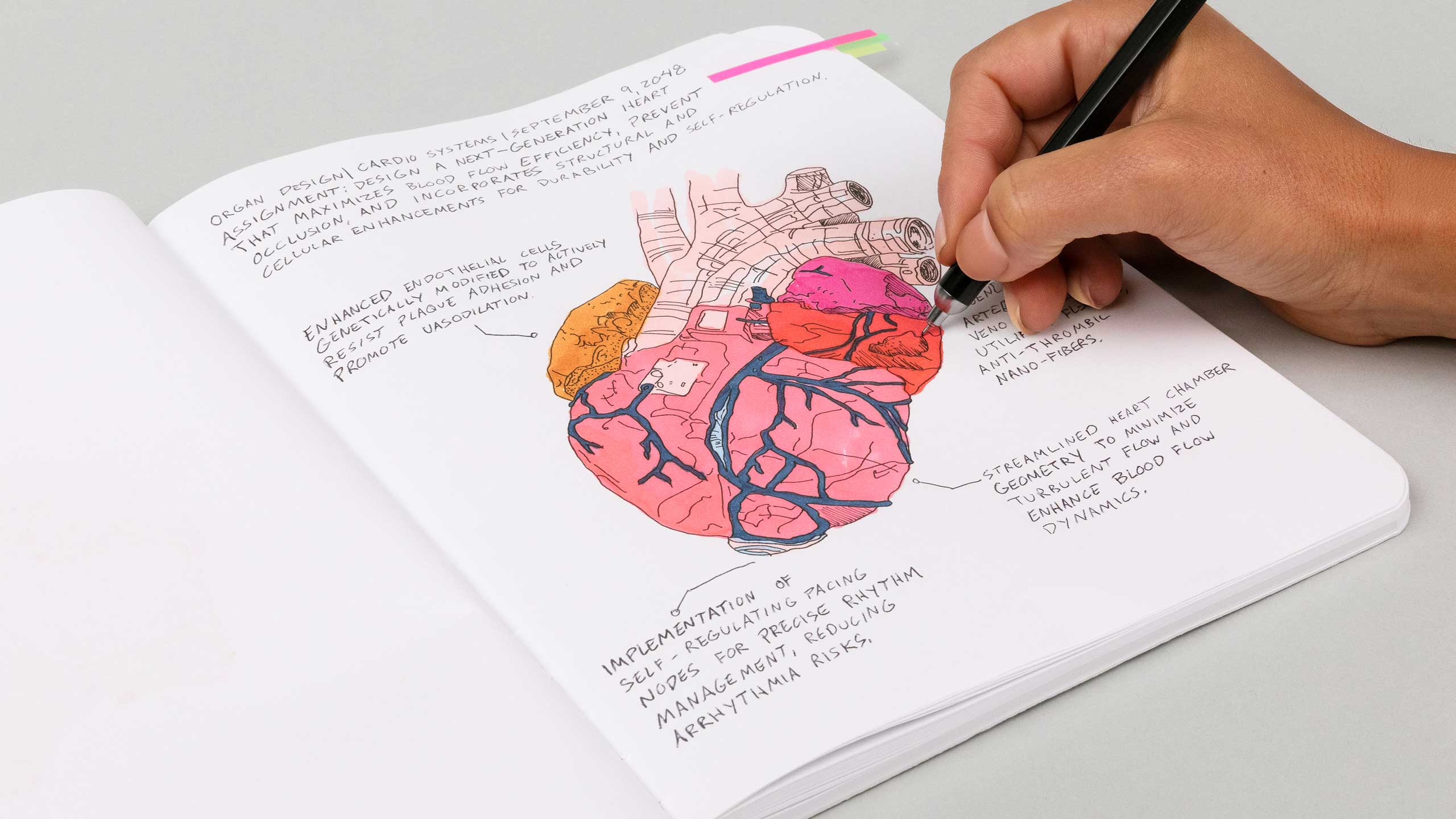
Notebook documenting re-designed human organs
Your organization’s forecast leaves this out. Someone’s drawing it into your future anyway.
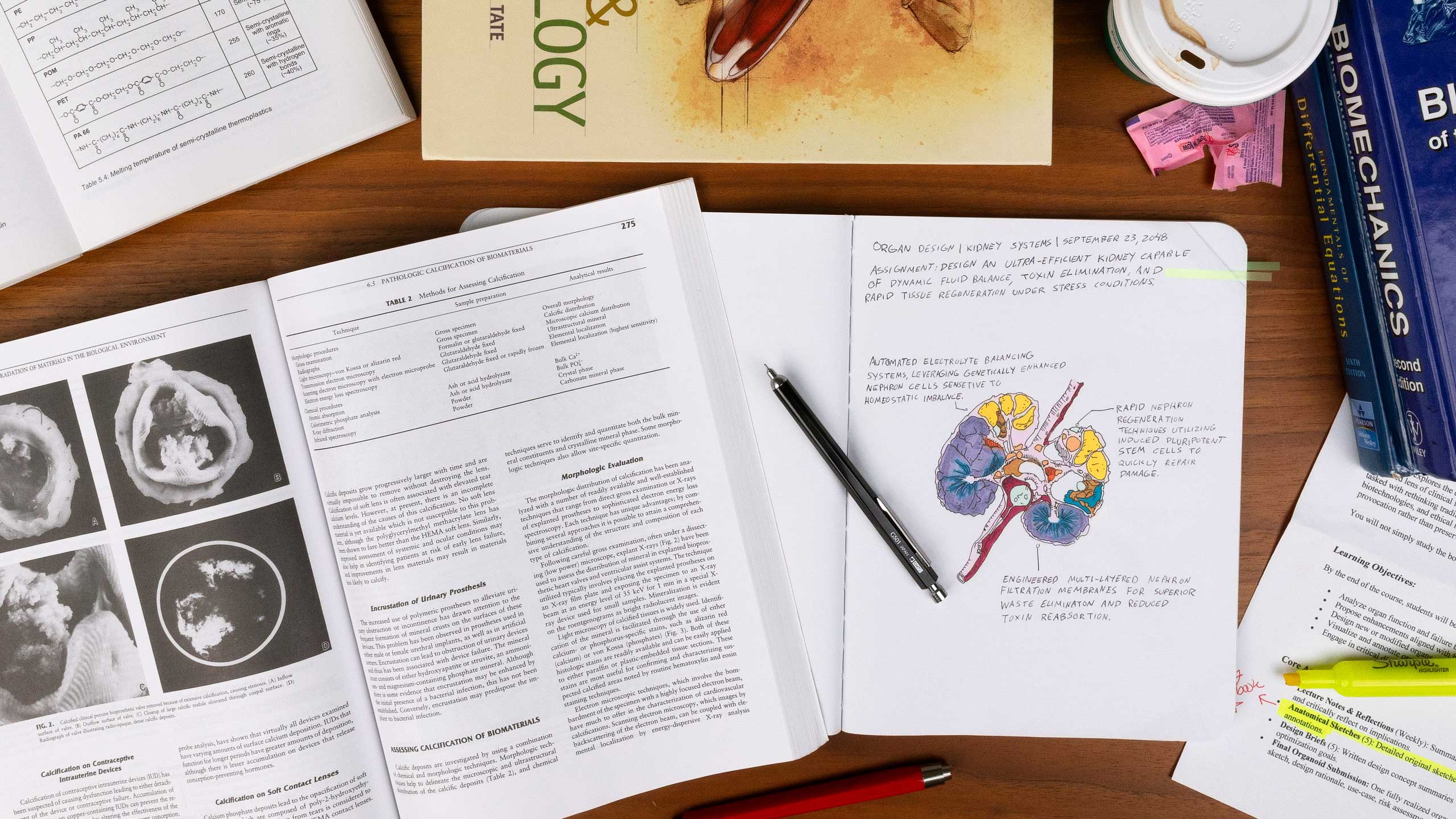
These are working pages from someone who treats the human body as a system open to redesign. Not something to repair when it breaks, but something to improve by design. A heart re-drawn to self-regulate its rhythm and eliminate clot formation. Lungs that clean themselves. A neurologic organ that integrates cognitive, limbic and biochemical data processing.
The body isn’t being saved or fixed. It’s being re-imagined.

The moment the body becomes something to iterate on, medicine stops being repair and becomes design: biology calibrated across an extended lifetime, not patched between doctor’s visits.
The move from reactive to proactive healthcare may not arrive the way you expect.
For decades, proactive has meant prevention. Screen earlier, catch disease sooner, advise on risk. What these sketches point to is a different future: not more prevention, but a continuous relationship with a person’s biology, managed and calibrated across a lifetime rather than checked at intervals.
Disruption like this shows up years before it’s in the headlines, if you know where to look. The organizations that learn how to read the weak signals early gain first-mover advantage.
Everyone else scrambles to catch up.
See the evidence behind this artifact ↗