Continuous body signals
Wearables, rings and ambient sensors are turning the body into a continuous data stream — one that a new class of company is racing to ingest, and that consumers increasingly assume everyone already is.
Change driver · Updated July 2026
The shift ahead
From episodic snapshot to continuous signal
For a century, knowing what a body was doing required an appointment. Now the body reports in every few seconds, whether or not anyone asked.
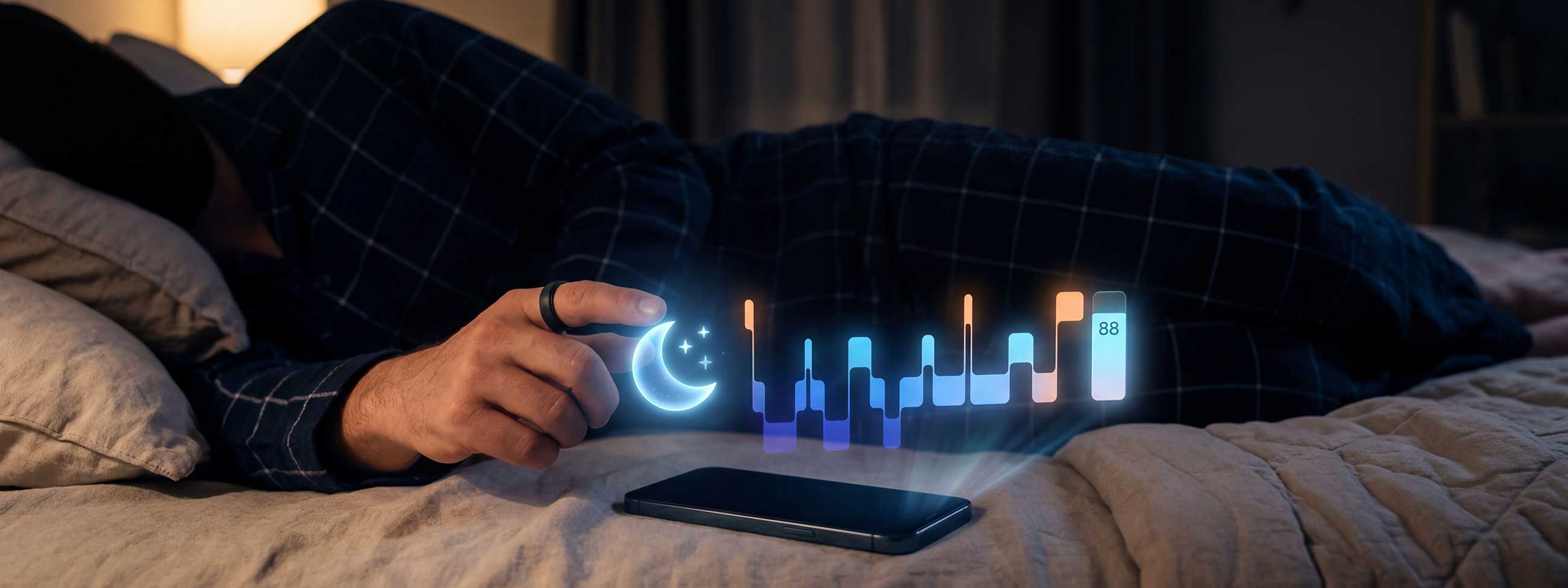
Watches flag heart rhythms, rings score sleep, patches read glucose through the skin — and the sensors keep migrating from specialist equipment into consumer objects people wear without ceremony. What used to be a reading taken once a year in a controlled setting is becoming a permanent feed generated everywhere else.
The shift is not more health data. It is the movement of the body from an episodic object of measurement to a continuous signal environment, where the interesting question stops being any single number and becomes the pattern across millions of them.
Why it matters
When the body becomes a data stream, everyone downstream inherits new obligations.
The continuous baseline changes what counts as knowing something: a snapshot that once passed for truth now looks like a single frame pulled from a film, and organizations making decisions on snapshots will be second-guessed by anyone holding the film.
It also changes exposure. Continuous signals are inherently intimate, and every product, employer or insurer that touches them inherits the trust problem along with the data.
Possible futures this could enable
-
01
Wellness gadgets cross the clinical line
The device isn’t new — the clearance is. Consumer sensors are crossing the regulatory boundary from lifestyle accessory to screening instrument, deputizing millions of wrists.
Early signalThe FDA cleared Apple’s hypertension notification feature in September 2025 — a 30-day optical analysis validated on more than 2,000 subjects that Apple expects to flag over a million people with undiagnosed high blood pressure in its first year
-
02
Continuous monitoring goes over the counter
Sensors once reserved for managing disease become shelf products for the merely curious.
Early signalDexcom’s Stelo became the first continuous glucose monitor cleared for sale without a prescription in 2024 — aimed explicitly at people who don’t use insulin, including those without diabetes who simply want to watch their own metabolism respond to lunch
-
03
Consumers assume you’re already listening
People arrive carrying months of their own signal history and assume the companies serving them — the clinic, the insurer, the employer, the mattress brand — are using it. The gap between assumed and actual becomes a trust problem for whoever holds the data and does nothing with it.
Early signalRock Health’s census-matched survey of 8,000 Americans finds 46% now own a wearable, up from 13% a decade ago — with 59% wearing theirs nearly always and a majority having already brought their device data into a conversation with a professional
Right now, the signals are ahead of the sense-making.
The streams exist at population scale; the interpretation layer doesn’t. The health systems, insurers, employers and consumer brands that receive continuous body data still mostly process it with episodic instincts — reacting to single readings, missing the pattern or ignoring the feed entirely because nothing in their workflow knows where to put it.
The line that will matter is the line between collecting the signal and being accountable to it: once an organization holds a continuous stream, “we didn’t notice” becomes a much harder sentence to say.
Watch what counts as a meaningful signal.
The driver strengthens as thresholds formalize: regulators clearing consumer sensors for detection, insurers and employers building policy around passive data, and the first disputes over what an organization should have seen in a stream it was holding.
The question is not whether the body will be continuously legible. It is who will be trusted to read it.
This is one force among many.
We track the ones that will reshape your field, and what to do about them.