Climate-ready operations
Sustainability used to be a value bolted onto operations. Climate shocks are turning it into a continuity question — whether the power, cooling and water hold when the weather stops cooperating.
Change driver · Updated July 2026
The shift ahead
From green aspiration to operating requirement
For years, going green was the responsible thing to do on the side. Now it is the thing that decides whether operations run at all.
A record-breaking heatwave knocks two cloud giants' data centers offline when their cooling systems fail. A tribal community rides out a wildfire blackout because its own solar and batteries kept the lights on. A chipmaker in the desert returns more water than it draws, because a plant that runs out of water has to halt. The weather has become an operating variable, not a backdrop.
The shift is not making greener buildings for a nice brochure feature. It is the movement of resilience into core strategy — where power, cooling, water and supply become the difference between a business that keeps functioning through disruption and one that stops.
Why it matters
When the environment outside can shut you down, keeping it out becomes an operating problem, not a values one.
Climate stress lands where the work actually happens: whether there is power to run the machines, cooling to protect them, water to feed the process and a supply line that still arrives. The building stops being a fixed backdrop and becomes part of whether anything gets done at all.
That reframes what leaders have to fund. Capital plans, procurement, emergency preparedness and site design all inherit a risk that used to sit with the facilities team — and the hardest trade is between near-term cost and the long-term ability to keep operating when conditions turn.
Possible futures this could enable
-
01
Resilience becomes an operating standard
How a site performs during disruption stops being a footnote and becomes a measure of whether it can be relied on.
Early signalIn the record July 2022 UK heatwave, cooling systems failed at Google and Oracle’s London data centers and forced shutdowns to save the hardware — a blunt sign that infrastructure built for yesterday’s climate is now a live operating risk.
-
02
Critical sites become their own grid
When the wider grid can no longer be trusted, essential operations generate and hold their own power.
Early signalBlue Lake Rancheria’s solar-and-battery microgrid rode out California’s 2019 wildfire blackouts, kept its campus running and served an estimated 10,000 people, credited by the county with saving four lives.
-
03
Circular operations move into core strategy
Water, waste and materials get engineered as loops, because the linear version is becoming too risky to depend on.
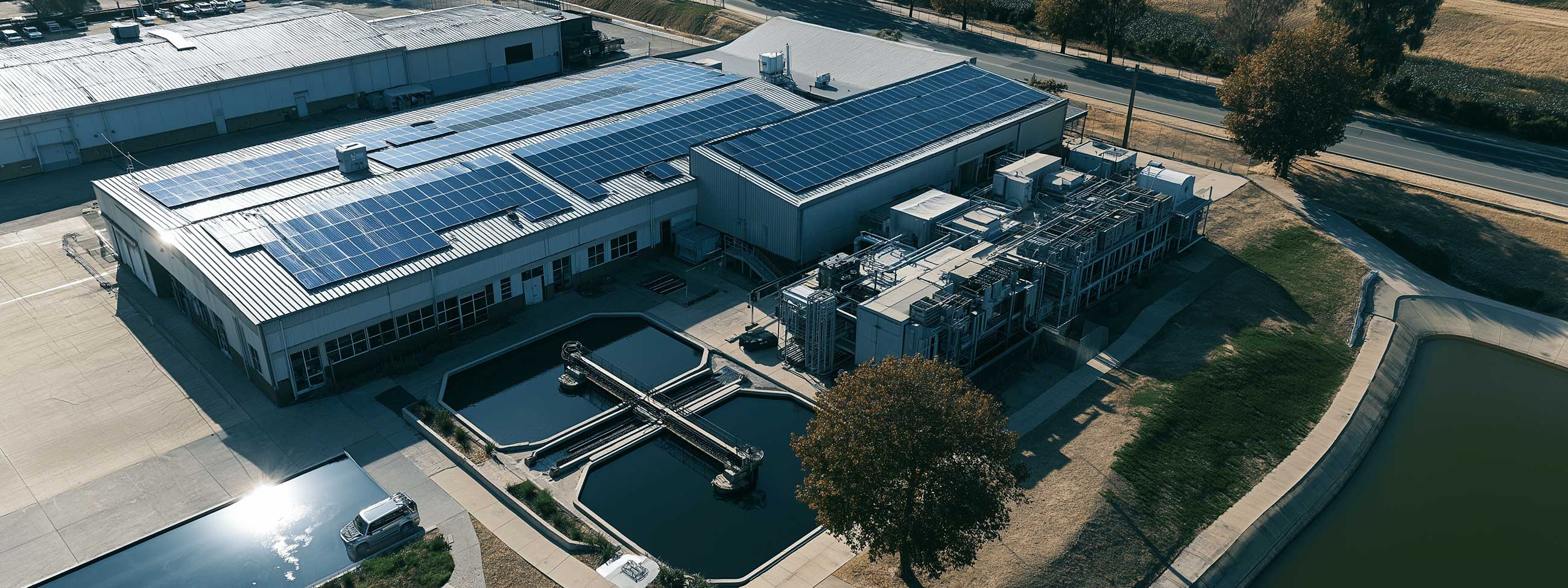
Early signalIntel reached net-positive water in 2024 across the US, India, Mexico and Costa Rica, returning more than it consumed in a business where a single chip campus can drink like a small city.
Right now, the shocks are arriving faster than the operating model is adapting.
Some operators are already hardening: renewable power, on-site storage, water recovery and buildings designed for a hotter, less stable world. Others are held back by cost, aging plant and pressures that feel more urgent than a storm that has not hit yet.
The line that matters is the line between sustainability as reputation and readiness as reliability. The stronger version does more than shrink a footprint. It keeps the operation standing when the conditions outside stop cooperating.
Watch what happens when climate stress reaches the operating model.
The driver strengthens when heat, grid instability, water scarcity, smoke, flooding and supply disruption start rewriting capital plans, site design and continuity strategy rather than sustainability reports. It strengthens again each time an outage or a shortage turns an abstract risk into a line on the budget.
The question is not whether operations should be greener. They should. The question is whether they can keep running when the environment around them no longer holds still.
This is one force among many.
We track the ones that will reshape your field, and what to do about them.