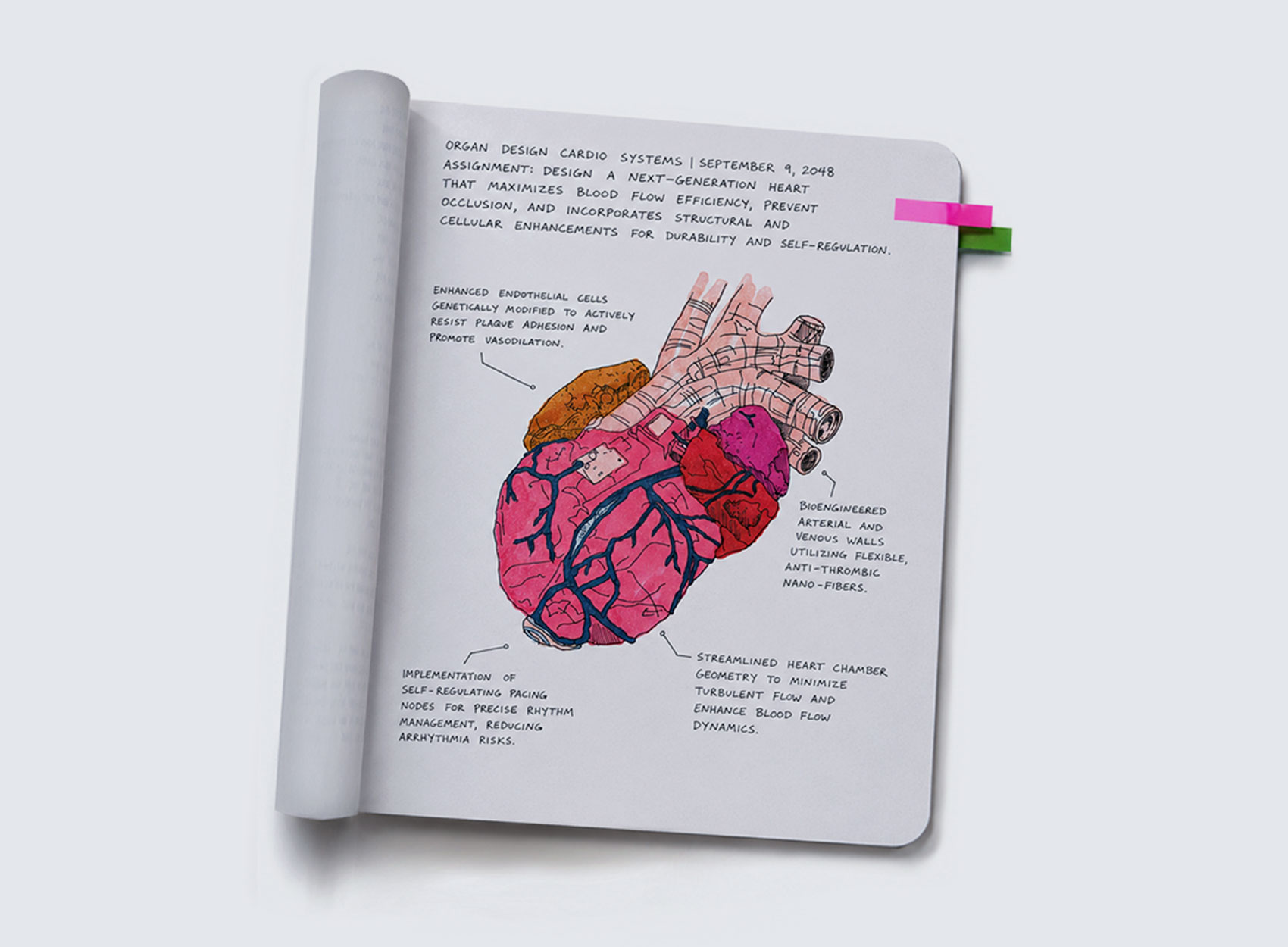
H-01.06 / artifact
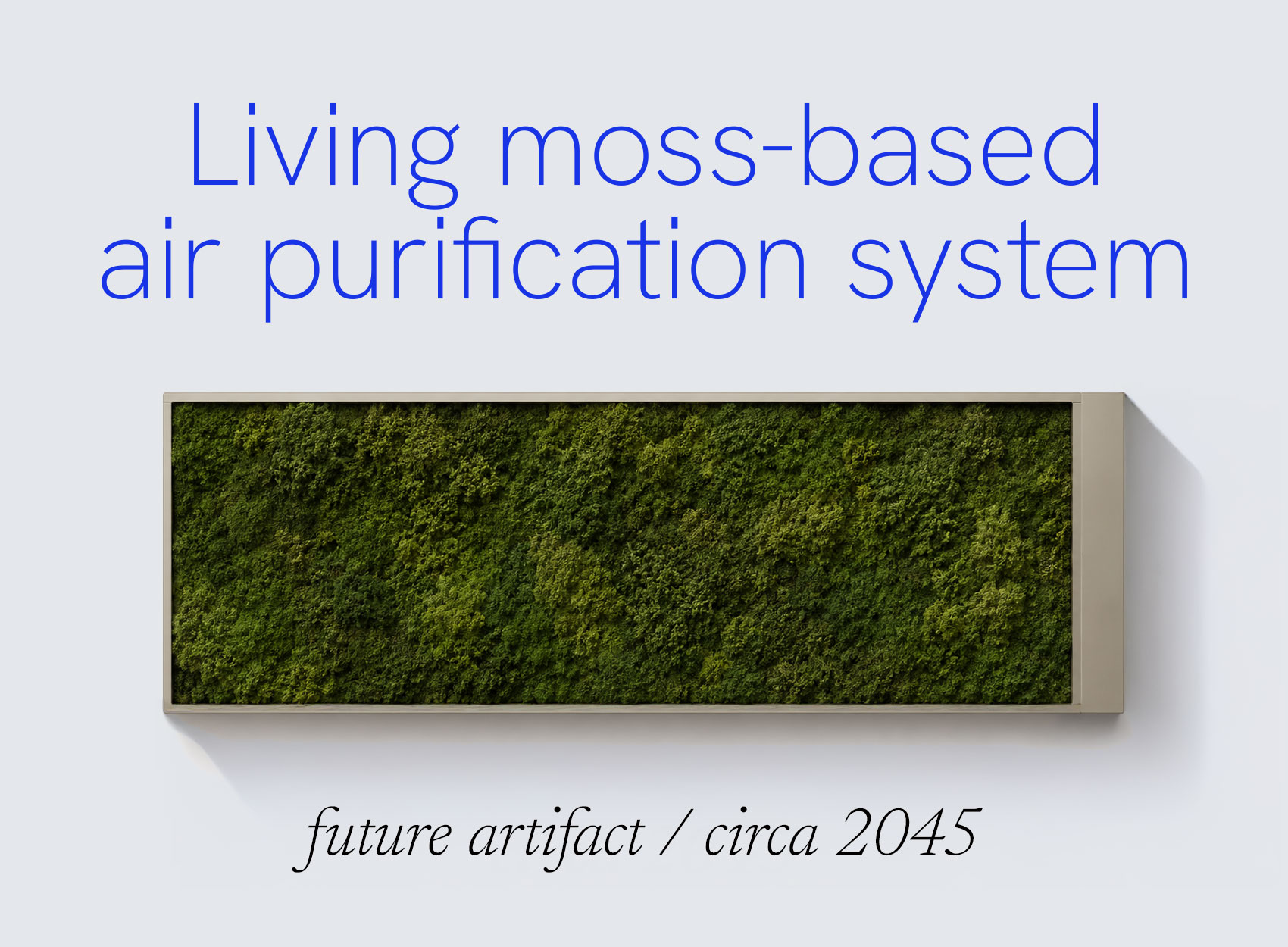
Living moss-based air purification system
Your facilities plan treats the built environment as a static container. The infrastructure just started breathing.
This air purification module from the future is alive. A compact bed of engineered moss that cleans a room by living in it — drawing fine particles, allergens and VOCs into its own metabolism. No cartridges to swap. No synthetic media to landfill. Just a living system that draws the room’s air through itself and regenerates on light and water.

This was not a filter you changed. It was something you lived with—part of the building’s respiratory system.
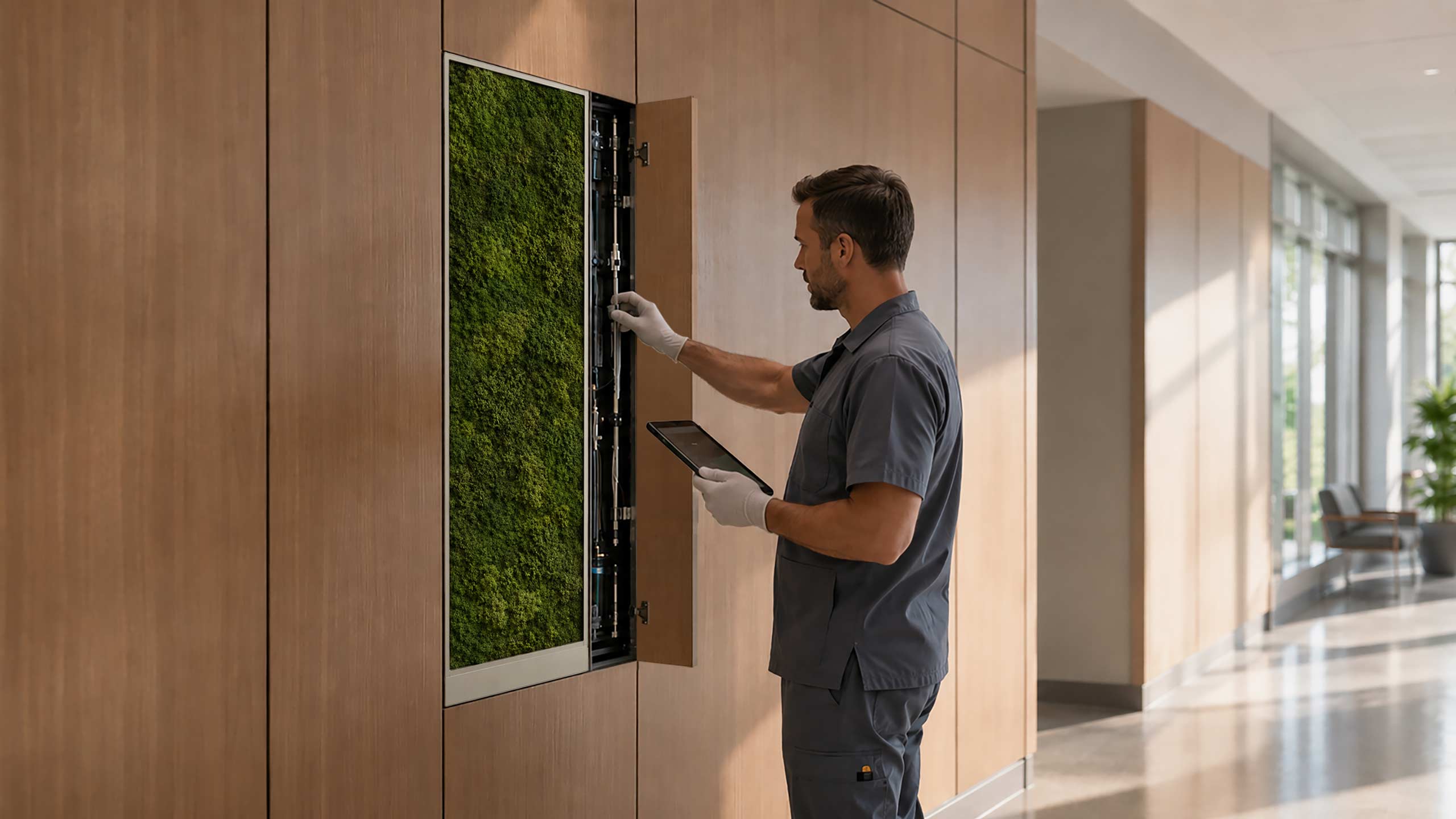
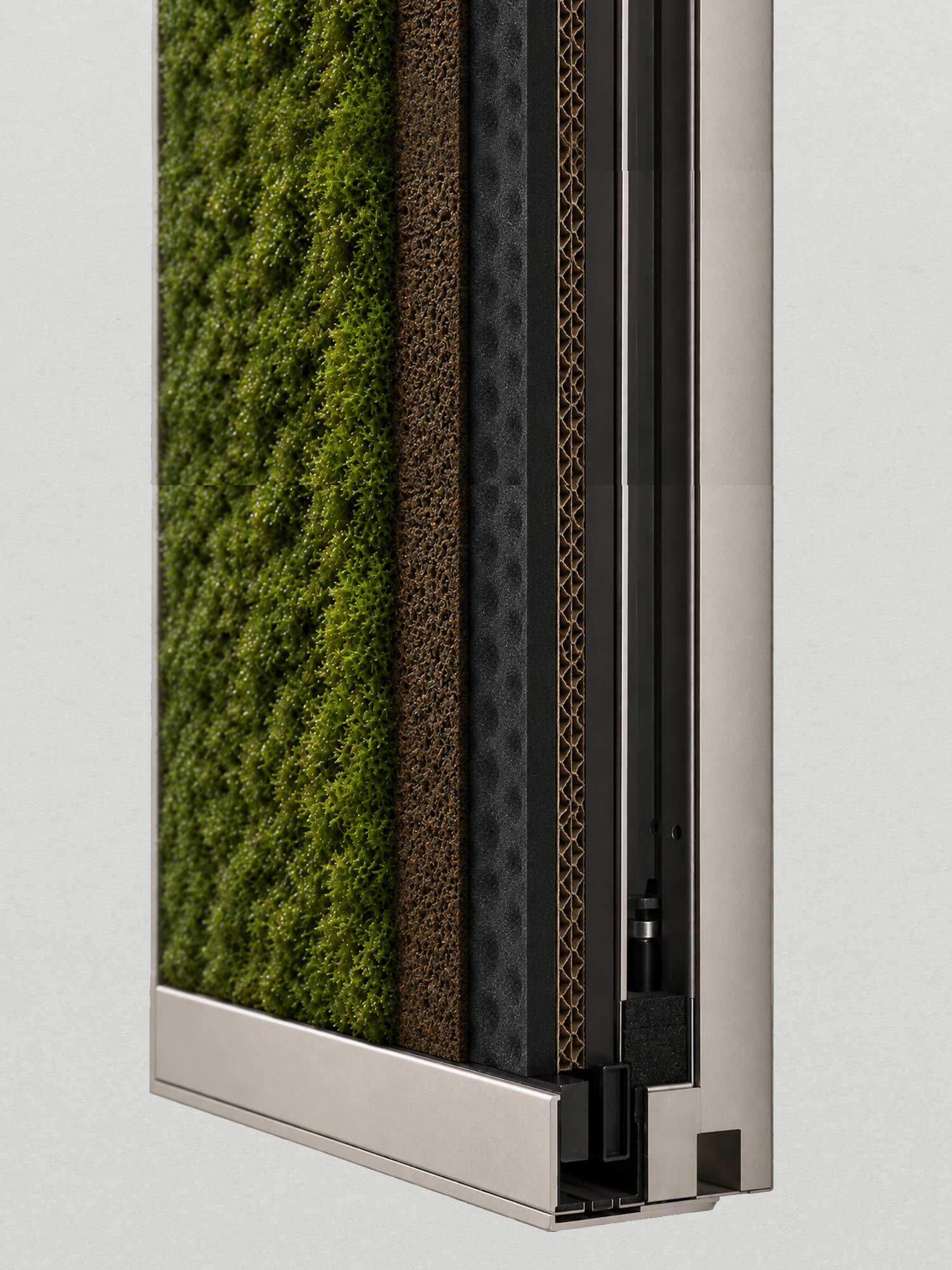
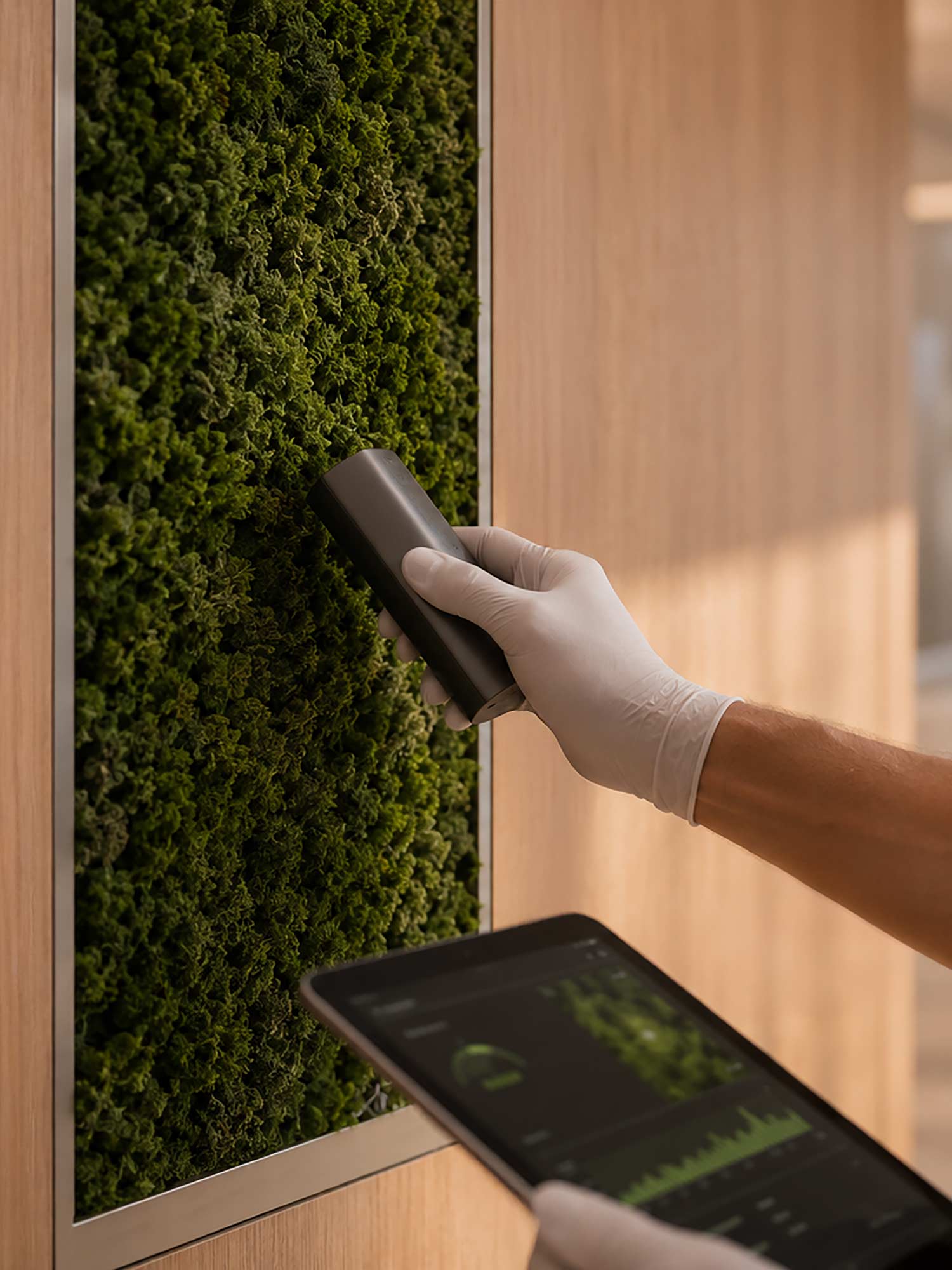

This living air-purification system is a small object. The assumptions it breaks are huge.
Most buildings treat materials as inert until people intervene. Concrete cures. Steel corrodes. Filters clog. Equipment degrades.
Inhalo points to a different model: infrastructure as managed ecology. Sensors, AI and living organisms work together to clean air, respond to changing conditions and repair over time.
That shift creates new value: resilience, carbon reduction, occupant wellbeing, biodiversity, heat mitigation, self-repair and connection to nature.
It also creates new responsibilities. Buildings will need biological diagnostics to monitor growth, dieback, adaptation and seasonal change. Facilities teams may need new capabilities in horticulture, ecology and infection-control risk management.
The future of facilities management may be less about maintaining equipment and more about stewarding living systems.
See the evidence behind this artifact ↗

The same future, anticipated, is the one you turn to your advantage.