Workforce transformation + operating model design
Redesigning operating models for the Age of Intelligence
How organizations redesign roles, decisions and trust as human and synthetic contributors increasingly share the work.
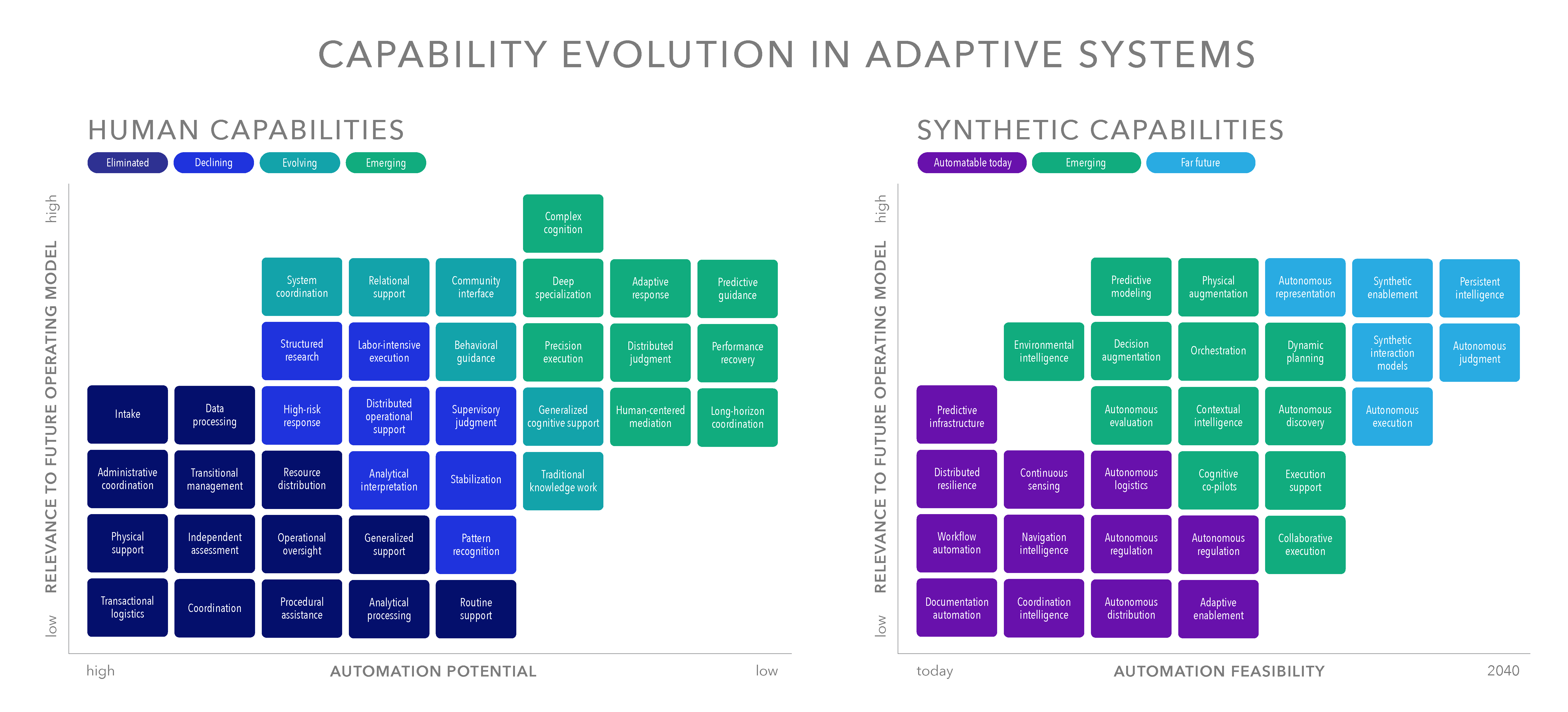
How organizations redesign roles, decisions and trust as human and synthetic contributors increasingly share the work.
We partnered with a large, complex organization to examine how its operating environment changes as automated systems, ambient intelligence and synthetic contributors become embedded in everyday work.
Rather than focusing narrowly on productivity or displacement, the effort explored what shifts when organizations must redesign how human and synthetic contributors work, share judgment and maintain trust together.
The structural questions it surfaced — about role boundaries, authority, identity and operational rhythm — matter as much as the technological ones.
What must organizations become as human and synthetic contributors begin sharing the work, the judgment and the responsibility?
New technologies are often approached as tools for efficiency: faster workflows, lighter administrative load. But the deeper shifts are structural — touching where expertise lives, how decisions are made, where responsibility sits and how people understand their own contribution inside the work.
Many organizations remain organized around procedural assumptions that no longer hold. The challenge extends well beyond technology adoption.
Organizations must rethink how people, authority and shared work hold together as operational environments become more distributed — and how the people inside them carry that change.
Using strategic foresight, systems thinking and operating-model exploration, the effort examined how organizations might evolve through 2040.
Rather than modeling a single future, the work traced multiple trajectories shaped by the maturity of synthetic capability, the depth of operating-model reinvention and the changing expectations people bring to their work.
It paid as much attention to identity, trust and professional boundaries as to roles, workflows and decision rights.
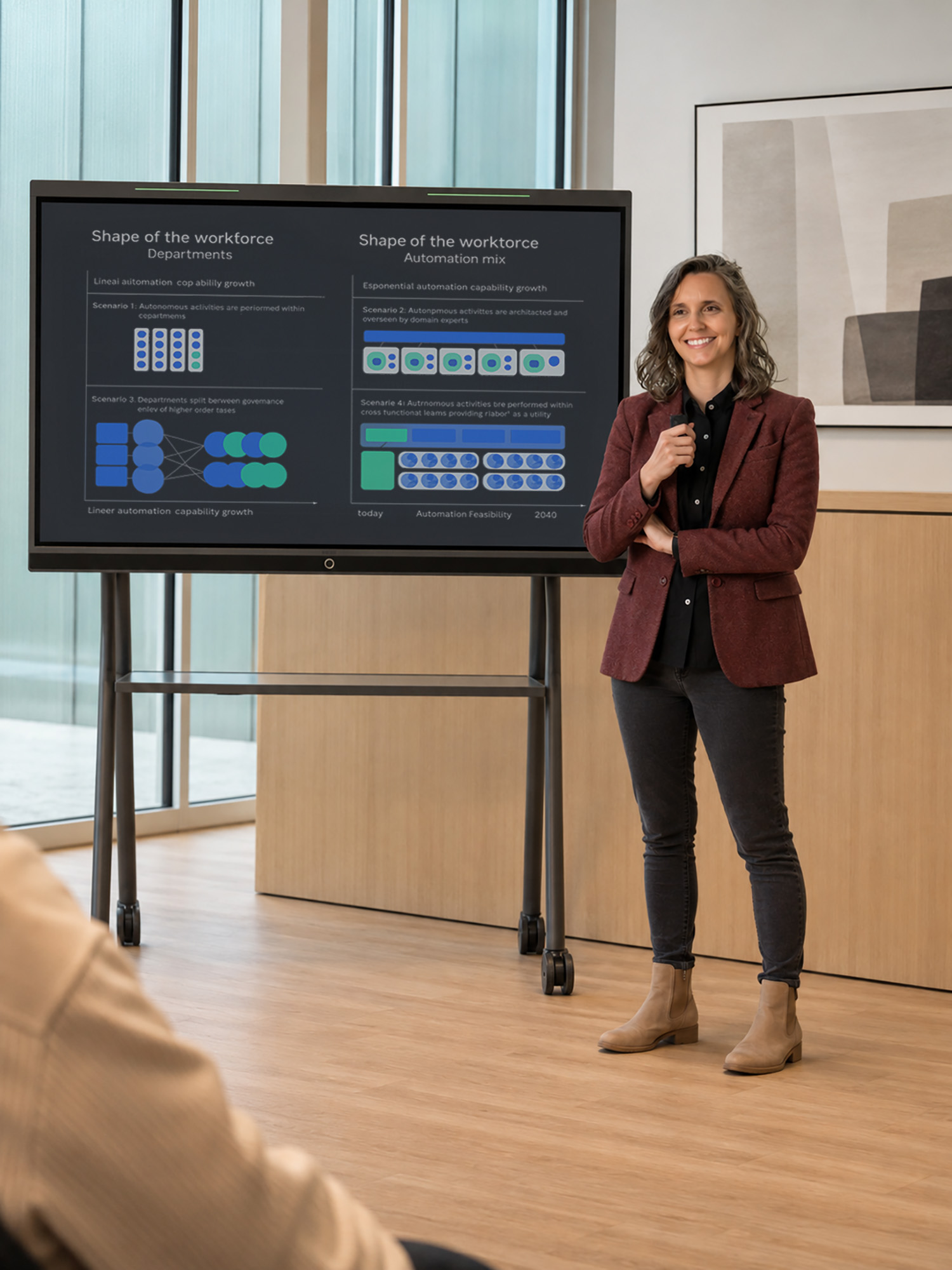
The goal is not replacing people. The goal is redesigning operating models around the forms of human contribution that grow more valuable — judgment, relational work, contextual decision-making, the holding of trust — as synthetic systems take on procedural load.
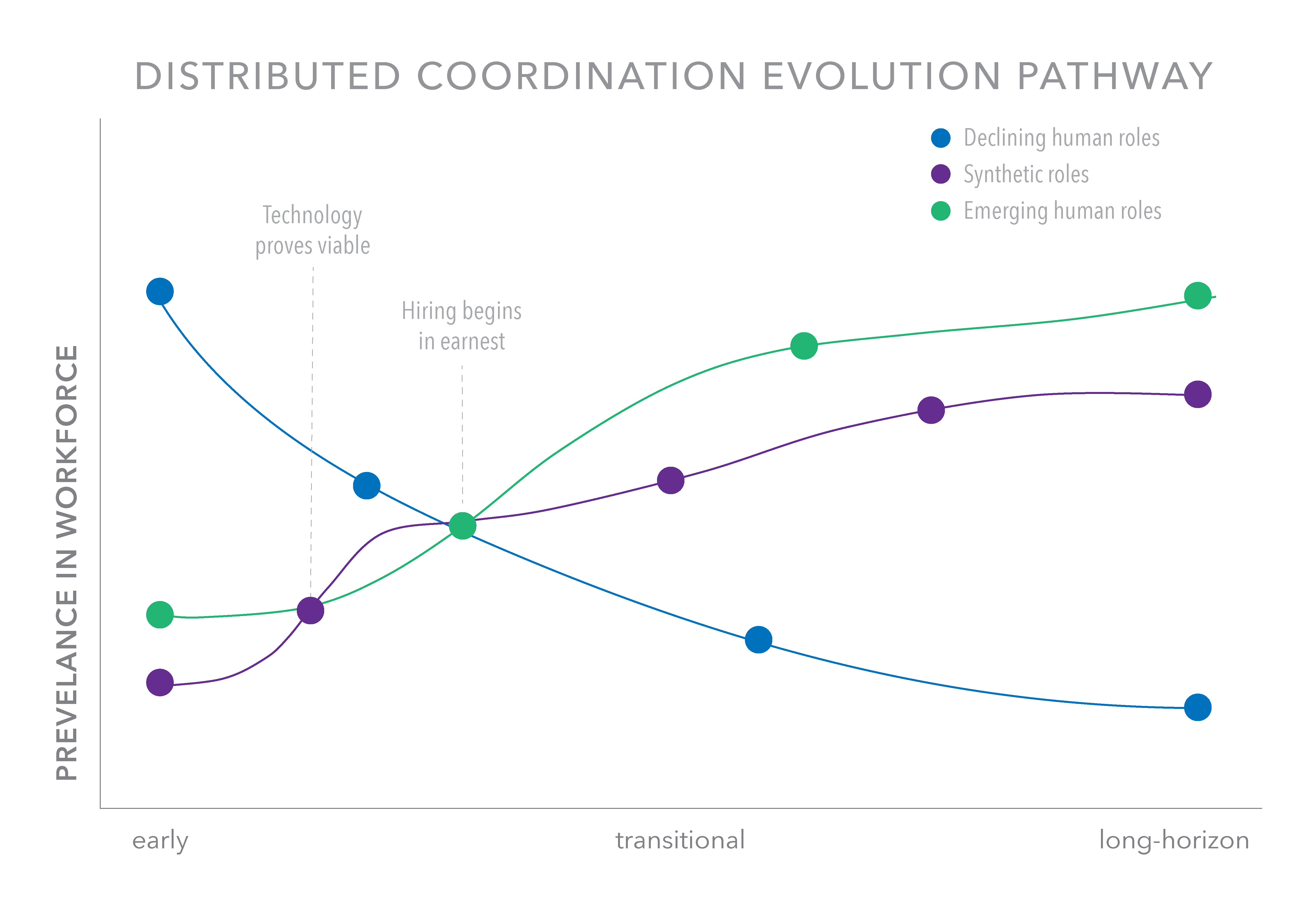
As procedural work shifts, human contribution concentrates around judgment and the quiet work of holding organizations together. The strongest future organizations are likely to combine synthetic capability with deeper, more confident human judgment — not less of it.
The work helped leadership move past simpler narratives — automation replacing labor, technology displacing roles — toward a structural rethinking of how the organization itself adapts.
Workforce evolution was reframed: not as a technology implementation challenge, but as a question of operating-model redesign — and of the trust, identity and authority shifts that come with it.
Most organizations are still asking how new technologies improve existing workflows. The deeper question is how the operating model itself must change — and how the people inside it carry that change.
Start a conversation ↗
A leadership system designed to align decisions, governance, behaviors and coordination for organizations under continuous disruption.
View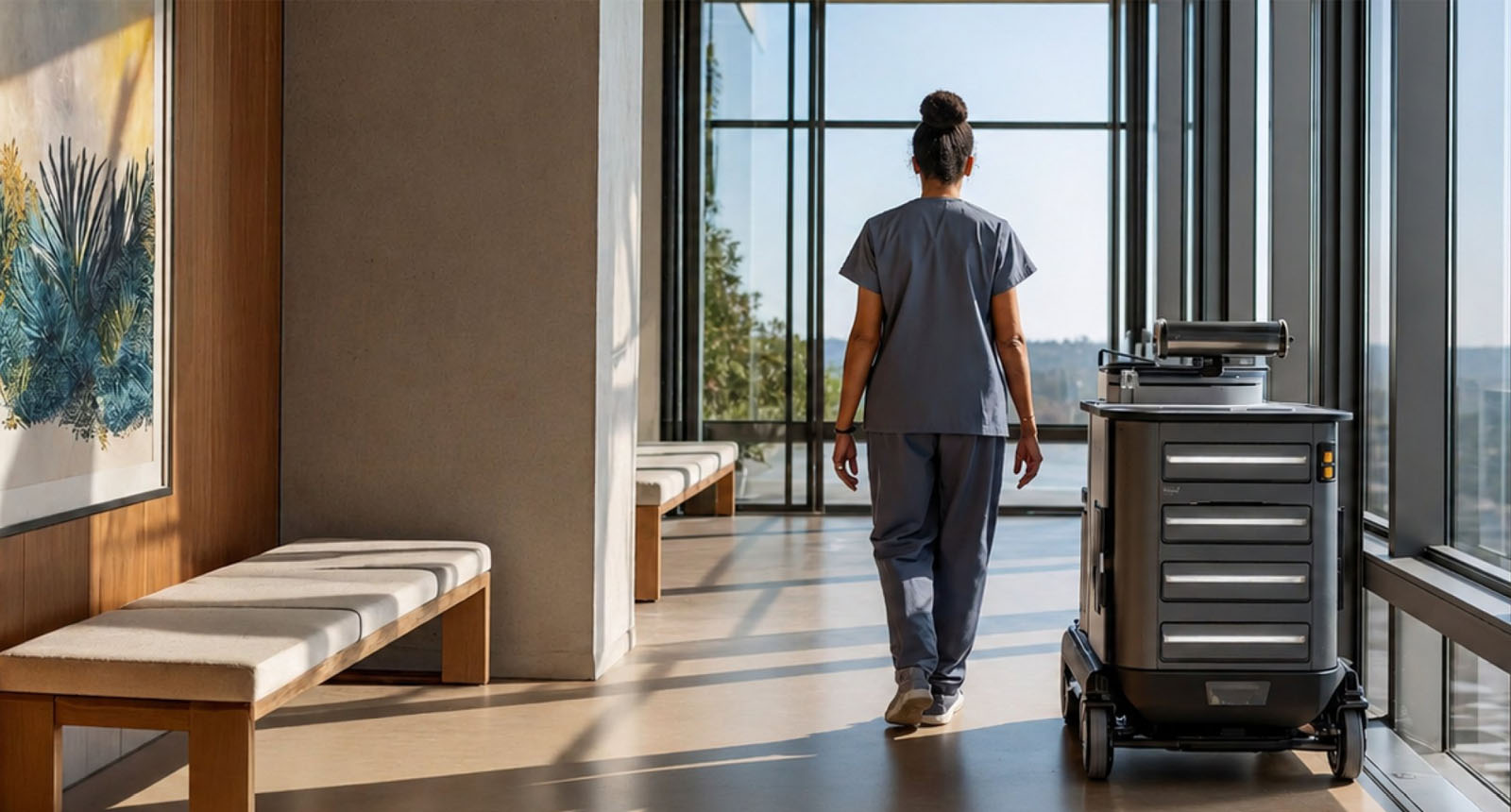
Operating-model and experience design for a new academic medical center built around intelligence, adaptability, care delivery, research and human trust.
View
A behavioral model of how care decisions get made, designed to help leaders anticipate changing expectations and guide long-range strategy.
View