H-01.02 / artifact
Posthumous data donation consent and end-of-life biometric signal
Medicine has only ever seen people in fragments. This is the first lifetime it was ever given.
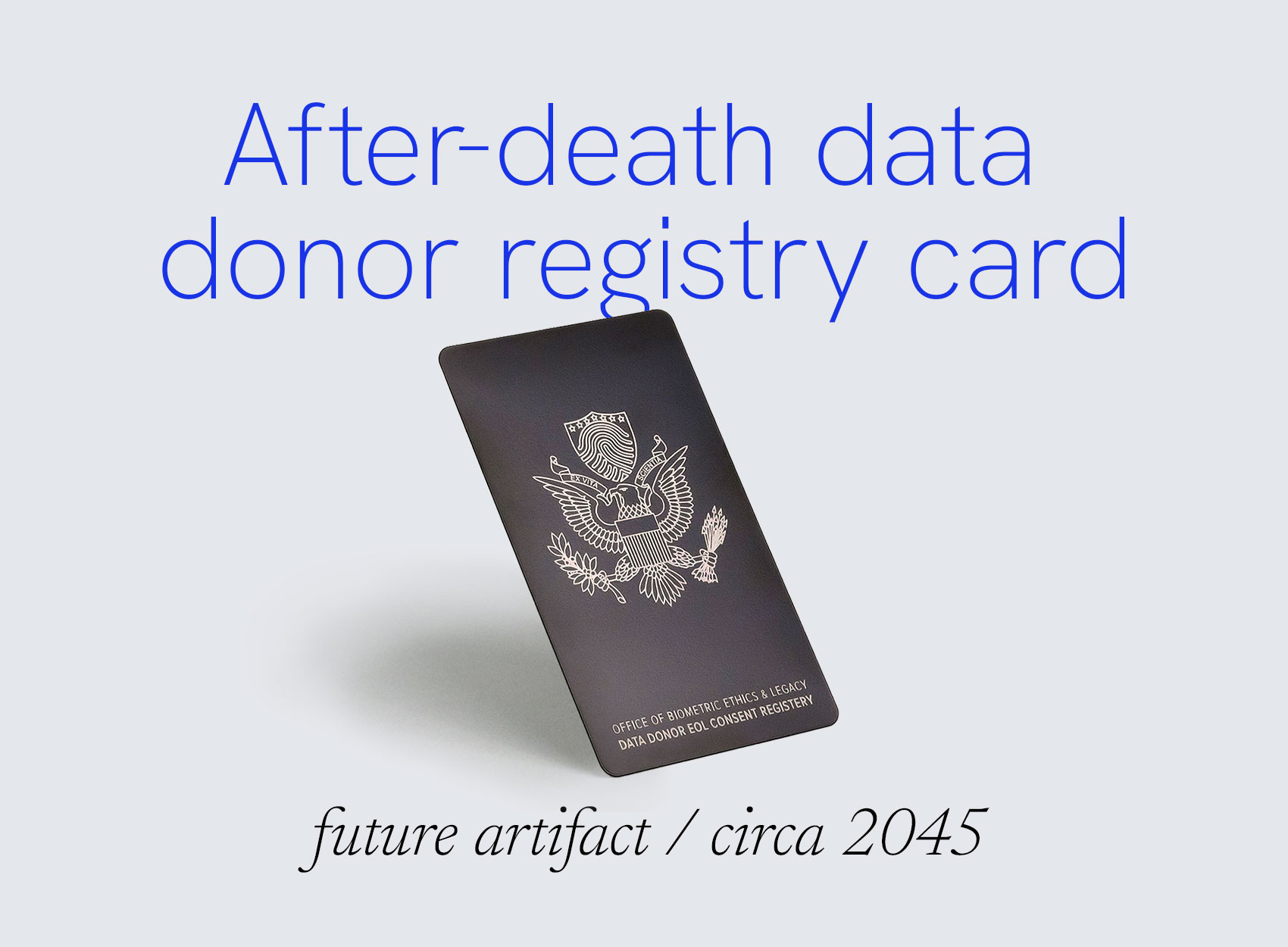
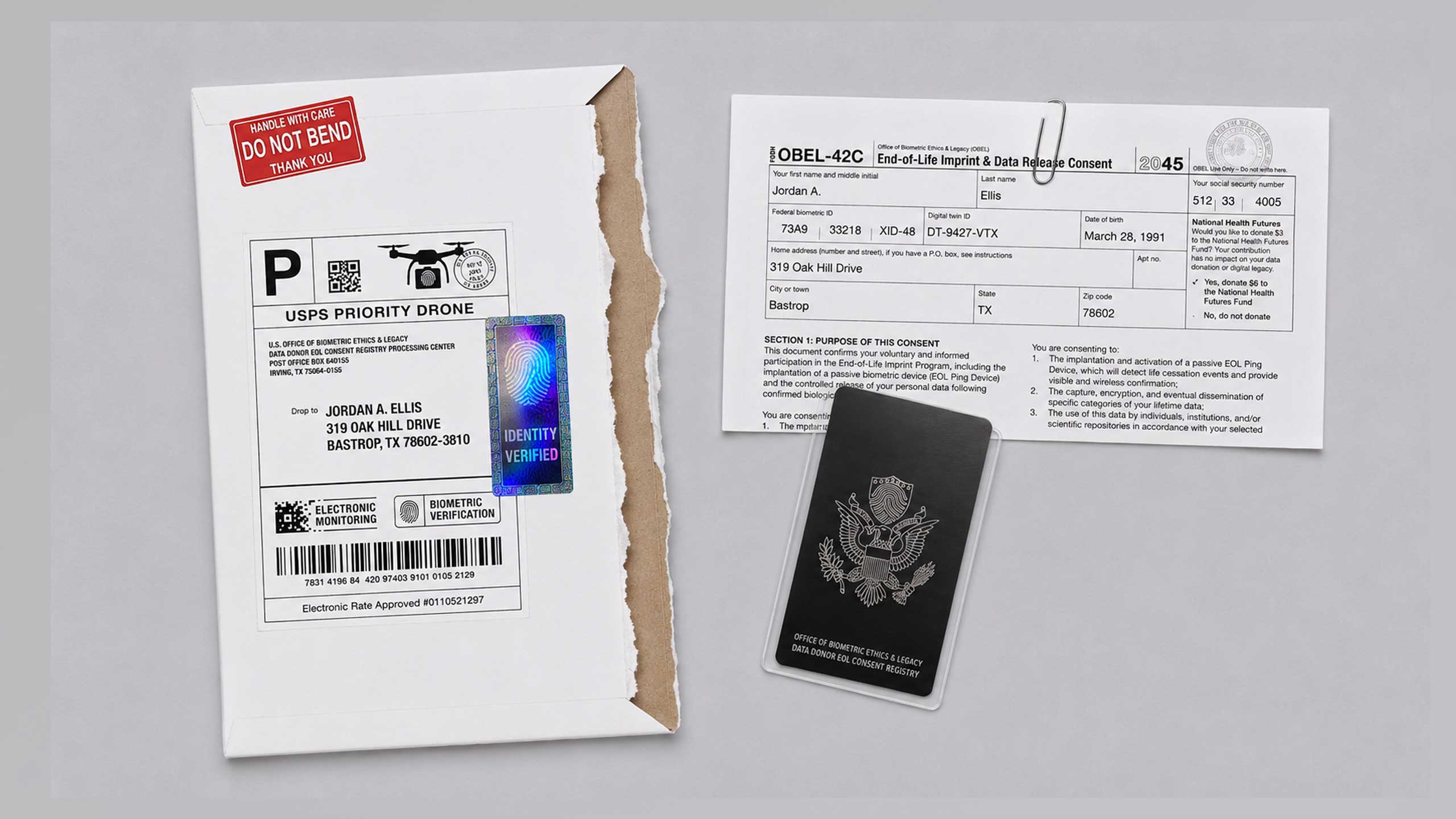
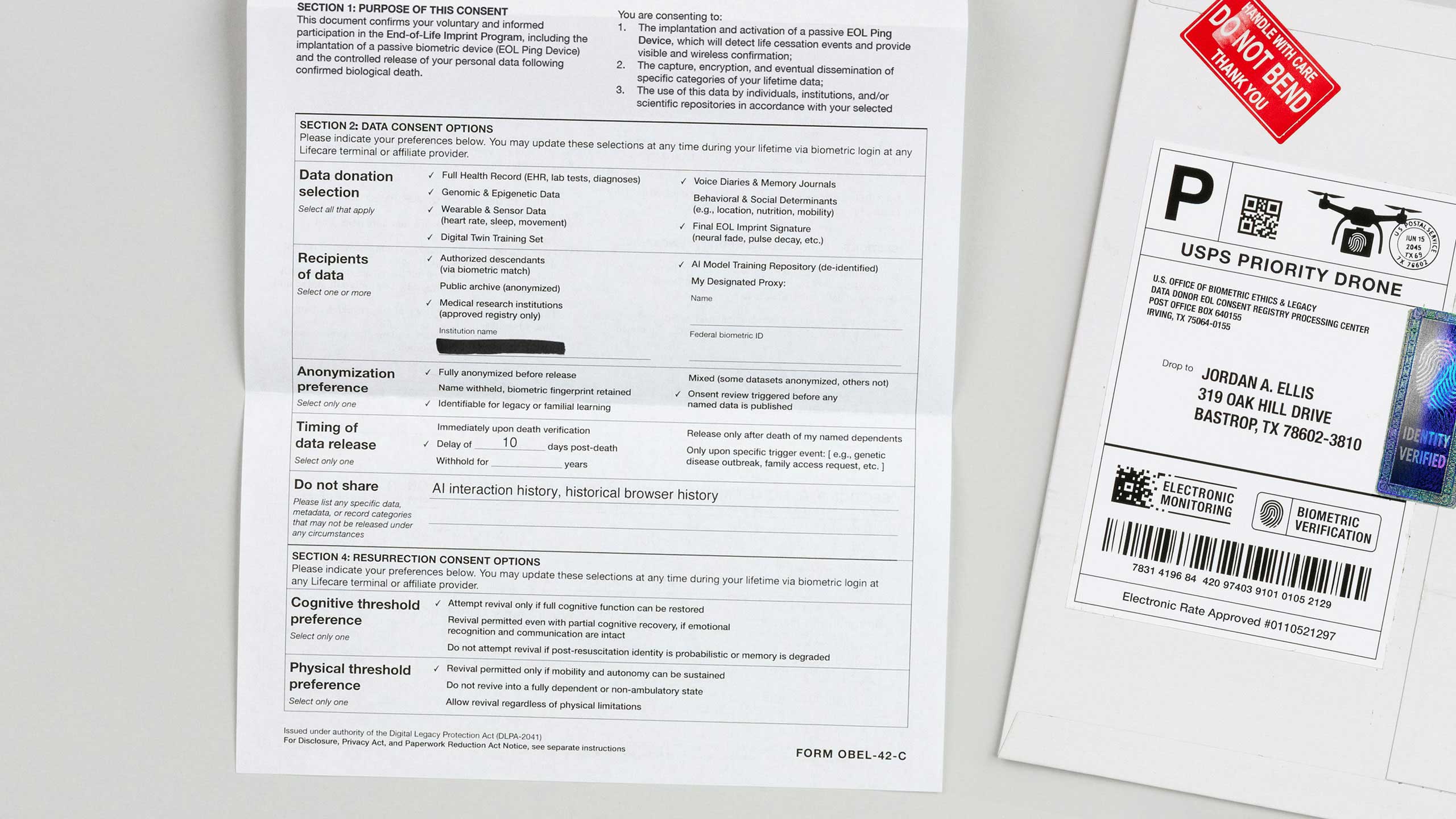
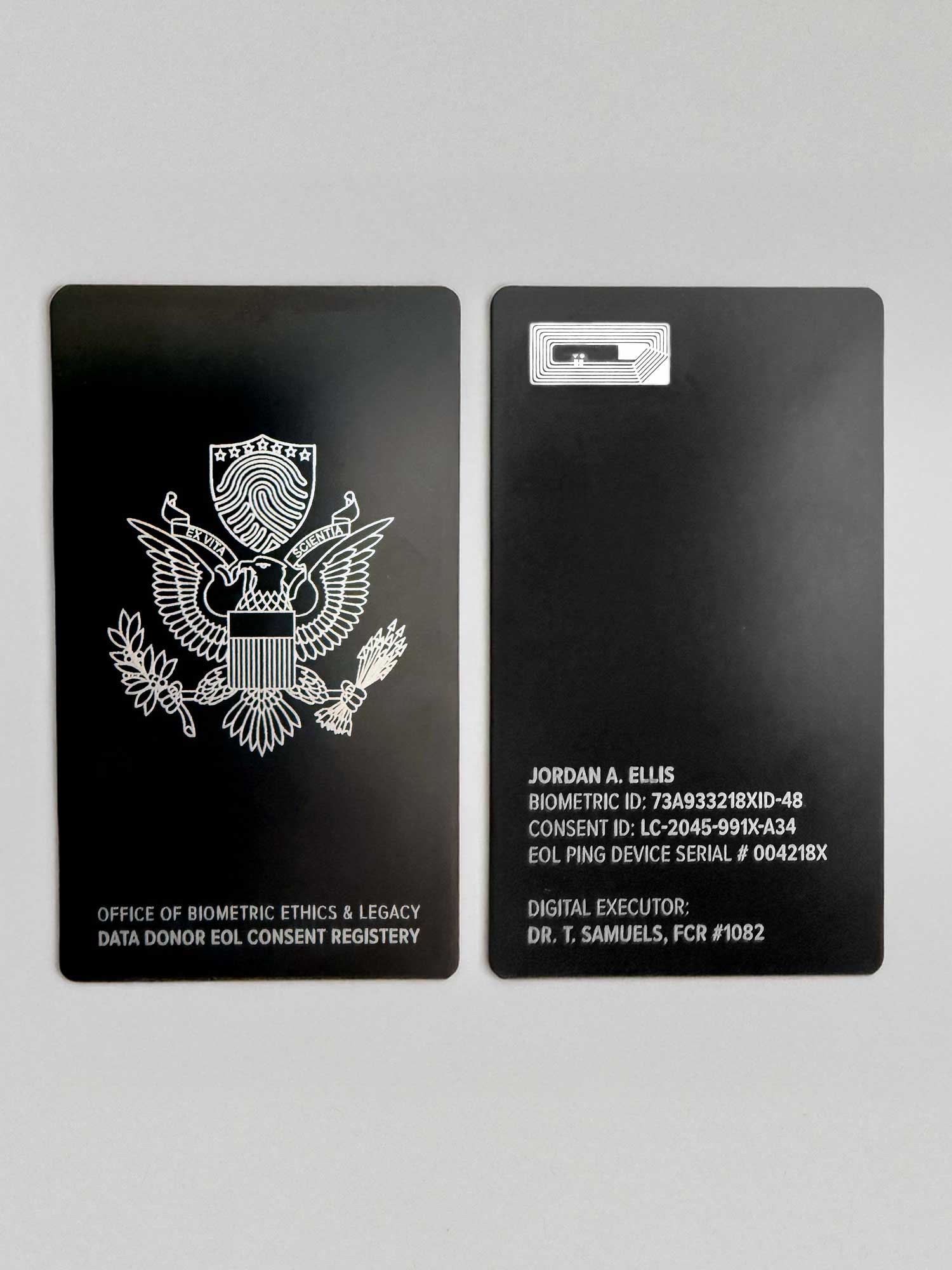
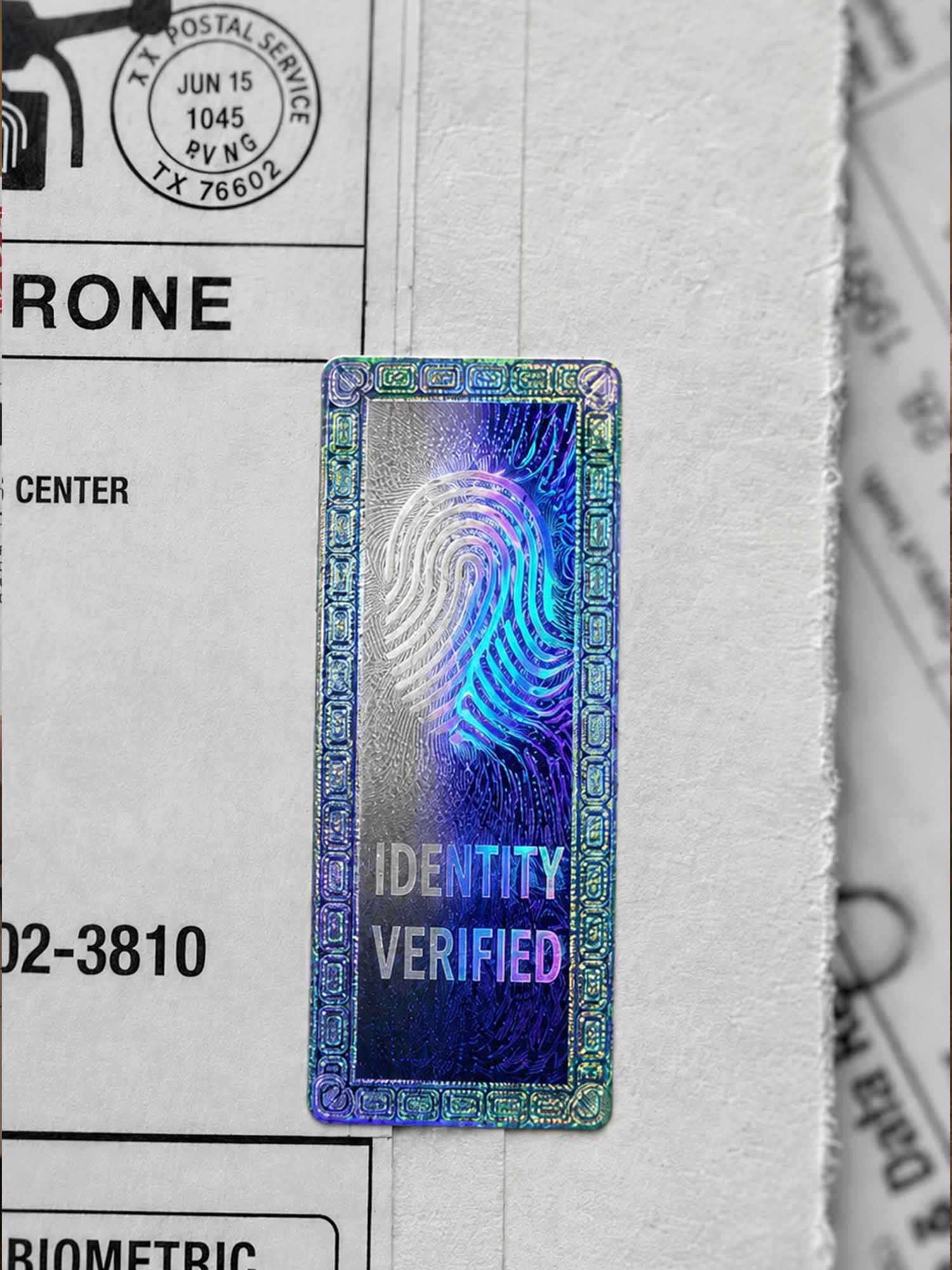
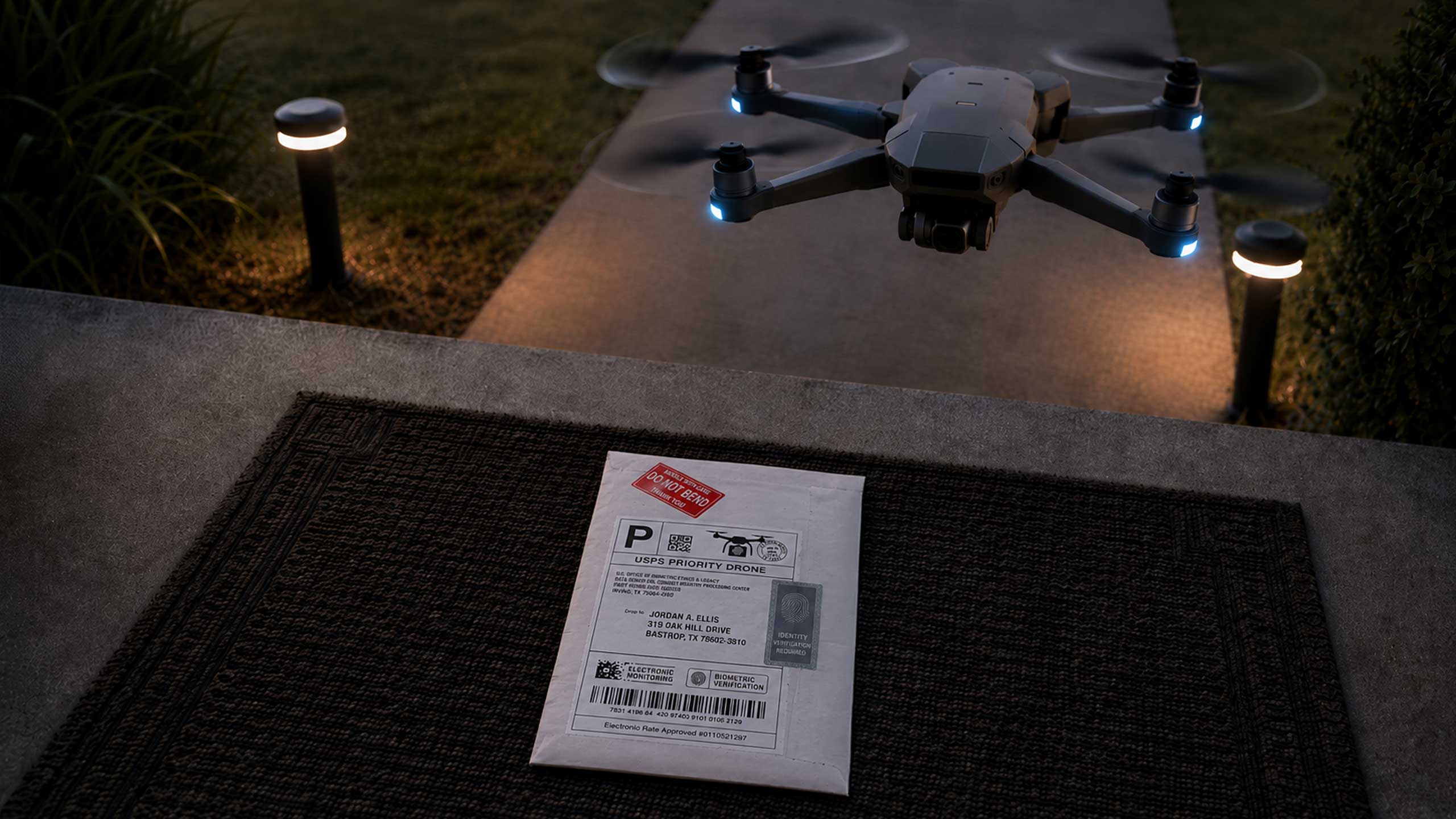
This is the paperwork for what happens to a person after they die. A consent form, a serialized donor card and a small implanted device, issued together so that when someone dies, their data does not die with them.
What it releases is not a medical record. It is a lifetime’s worth of data: the full health history, the genome, years of behavior and sensor data, the digital footprint. The person chooses who receives it, descendants, researchers, AI repositories and on what terms.

Until now, when a life ended, most of what it held ended with it. This document turned a life into a legacy others could learn from.
We solved how to donate the body. No one has solved how to donate the life.
Human health is shaped by far more than the physical body, yet our ability to study that fuller picture has been limited. This process let people freely give the whole texture of their existence: how they slept and moved and ate, where they lived and what they were exposed to, what they searched and watched and worried about. It is the kind of living record science has never had, and could keep learning from long after the person is gone.
Through one final act of service, a person could hand science a record it has never been able to assemble on its own. But a lifetime of data, gathered mostly outside any clinic, does not fit the relationship medicine is built around. It is bigger than a patient and longer than a life. It raises a real question: who builds the means to receive something like this, to hold it, to study it, to turn it into something that serves everyone? None of that exists yet.
A richer, more complete picture of a human life will be possible. Who’s going to be ready to capture its value?
See the evidence behind this artifact ↗