
H-01.09 / artifact
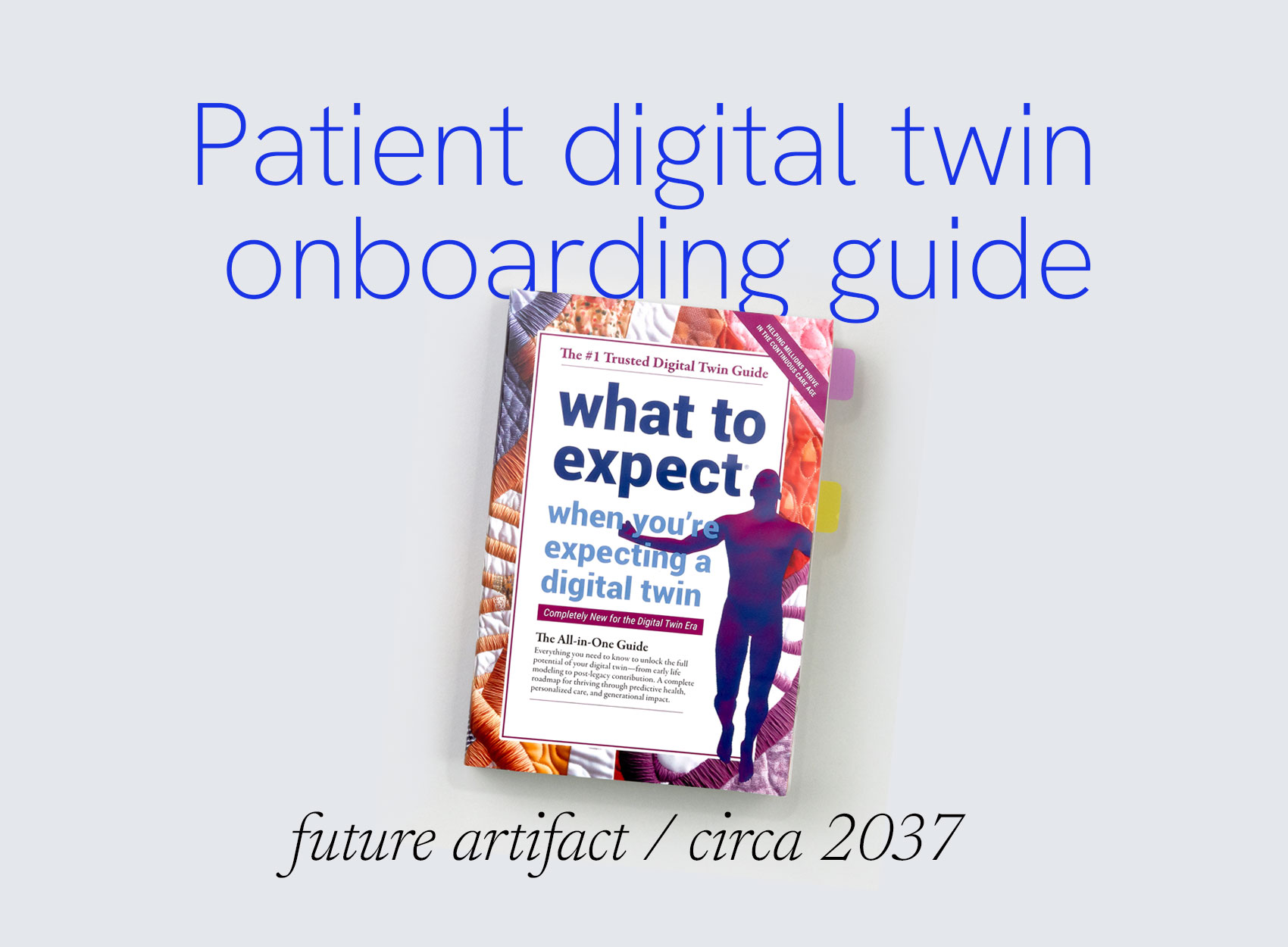
Guide for living with a medical digital twin
The new standard of care is an N-of-1. The standard your organization runs on just became the floor.
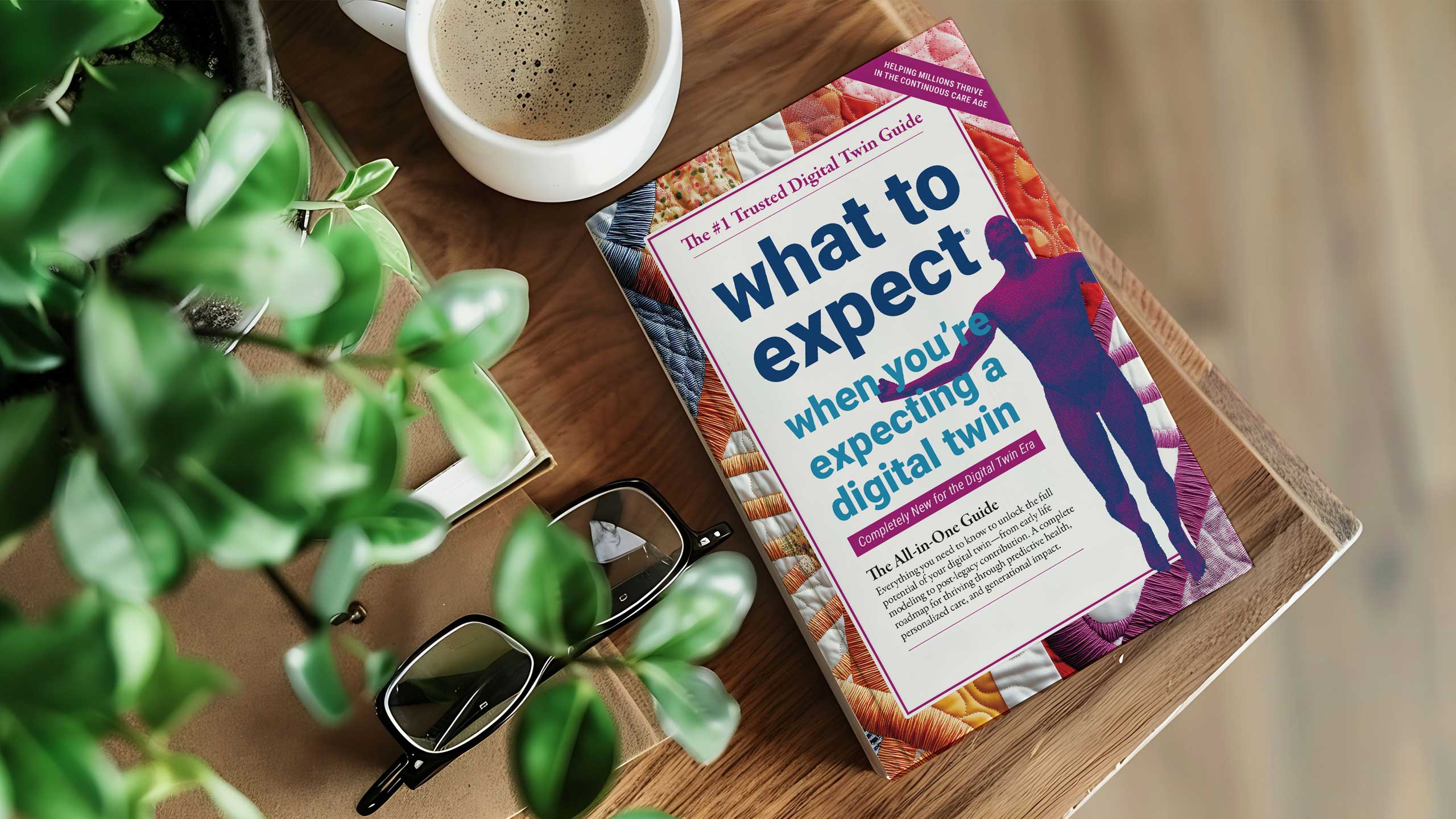
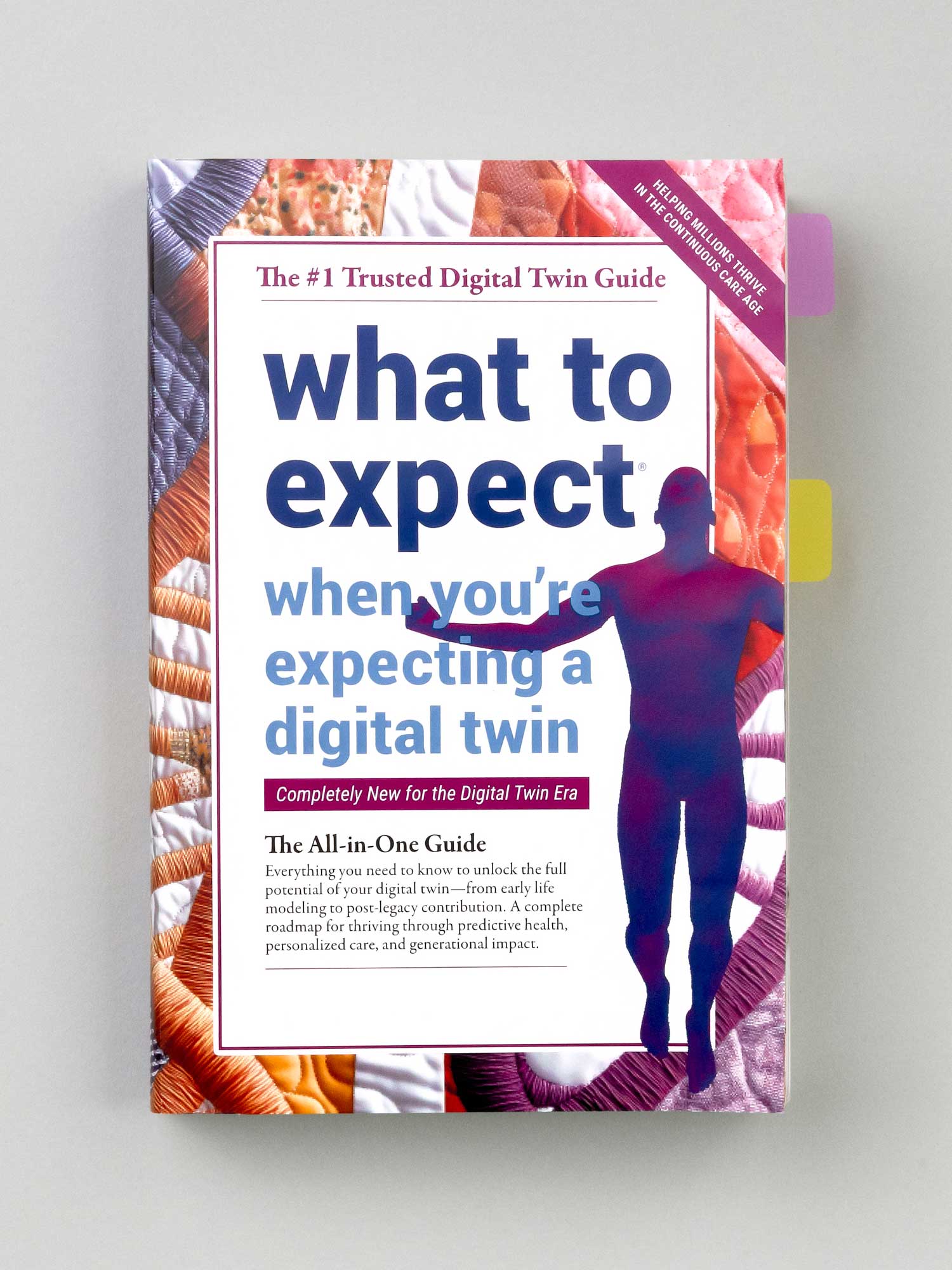
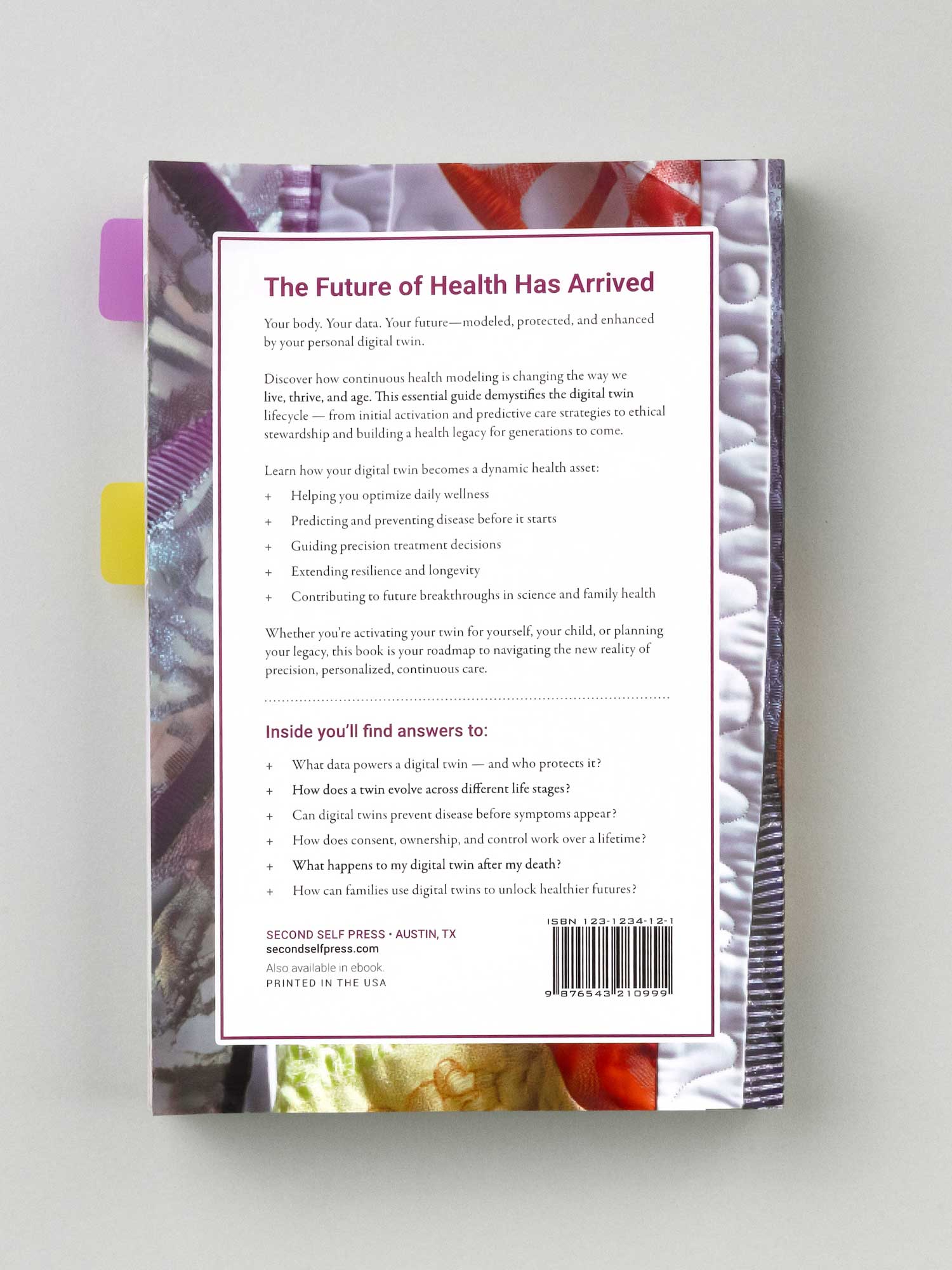
This is What to Expect When You’re Expecting a Digital Twin: a patient handbook for a body that has a second copy. A printed guide a clinic might hand someone at intake, written to help an ordinary person understand what it means to live alongside a digital twin: a continuous, computational model of their own biology that updates in real time and increasingly shapes diagnosis, treatment and what gets done before they ever feel sick.
Part user manual, part emotional primer, it answers the questions people ask first. What is a digital twin? How does it stay current? Who can see it? Can it outlive me?

For many people, this was the first time the exam room held three: a doctor, a patient and a model that knew the body better than either.
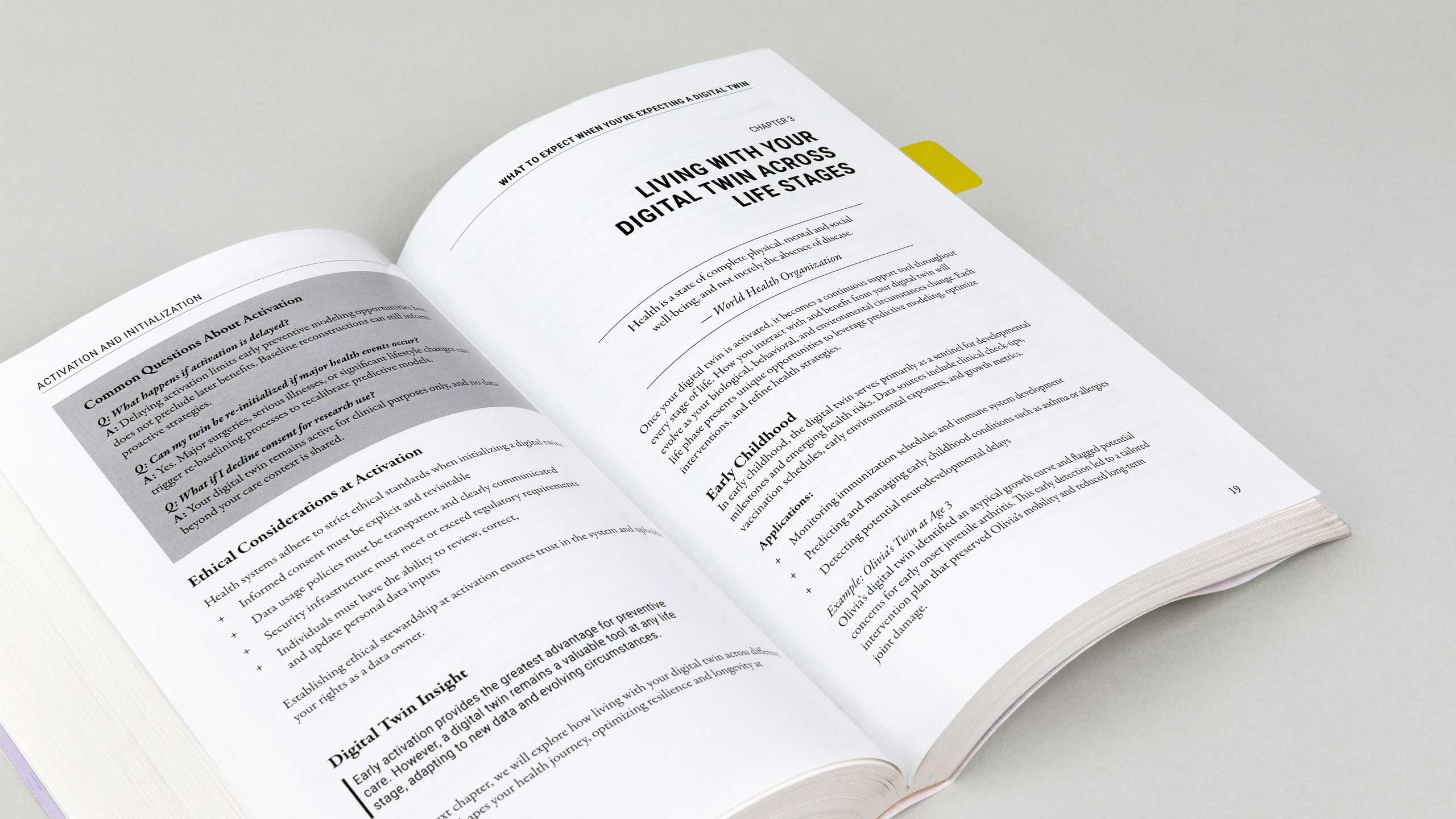
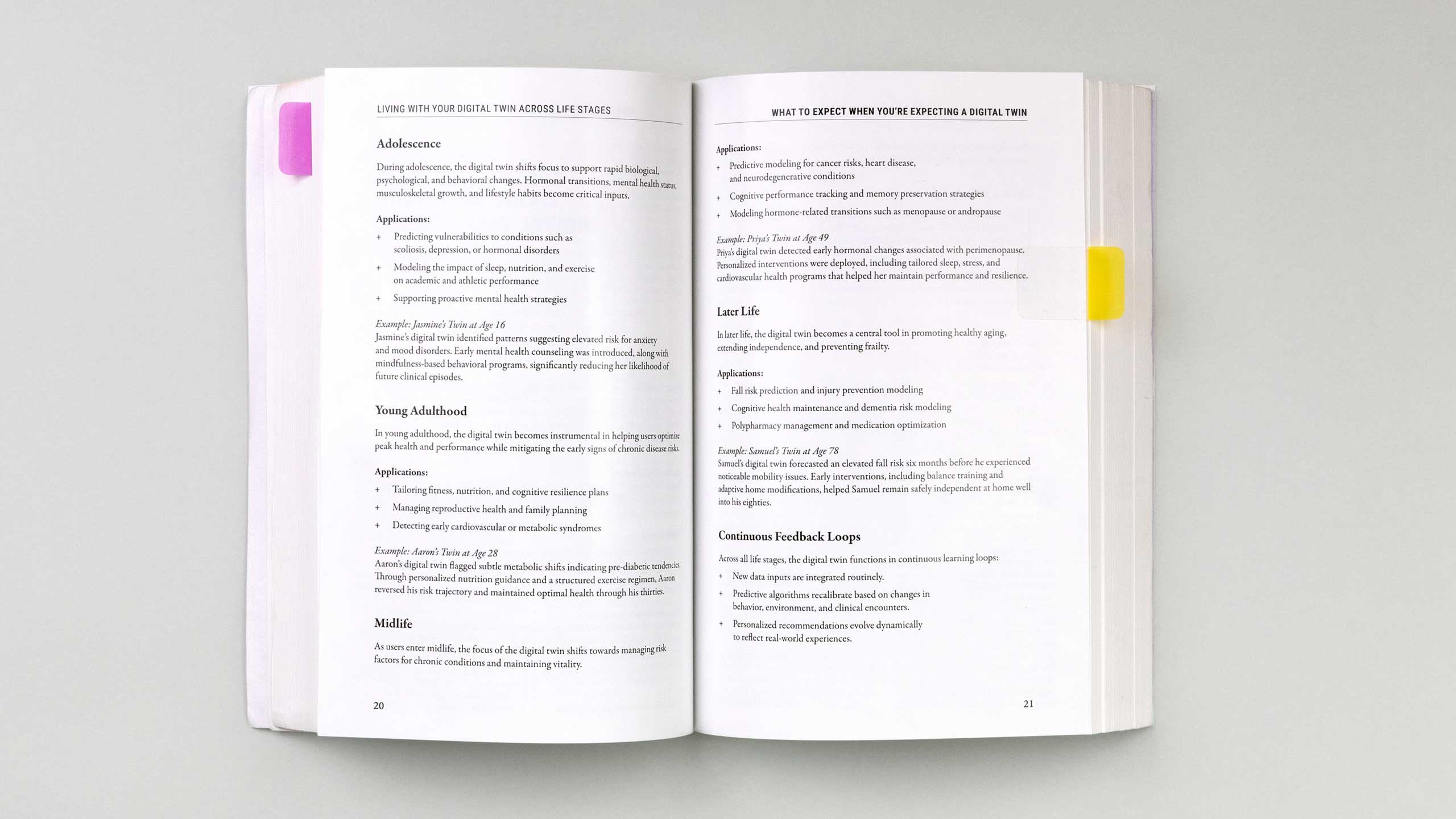
The digital twin can be built by AI. A workforce that can practice without a protocol cannot.
Today, delivering high-quality care means being good at standardization. Clinicians are trained to recognize and apply the best protocol, and the system rewards the consistency. AI and biotech now put something higher within reach: precision care modeled to a person’s exact biology and preferences, at the scale of everyone. Before long, anything less reads as subpar.
That is what high-quality care of the future will demand, and it asks the people delivering it to work in the exact way their training taught them not to. The opening is to start the unlearning now, while it still looks early, because the higher standard belongs to whoever can deliver it, not whoever can merely offer it.
This book prepared patients for their digital twin. Preparing a workforce for an entirely new model of care delivery deserves even more preparation.
See the evidence behind this artifact ↗
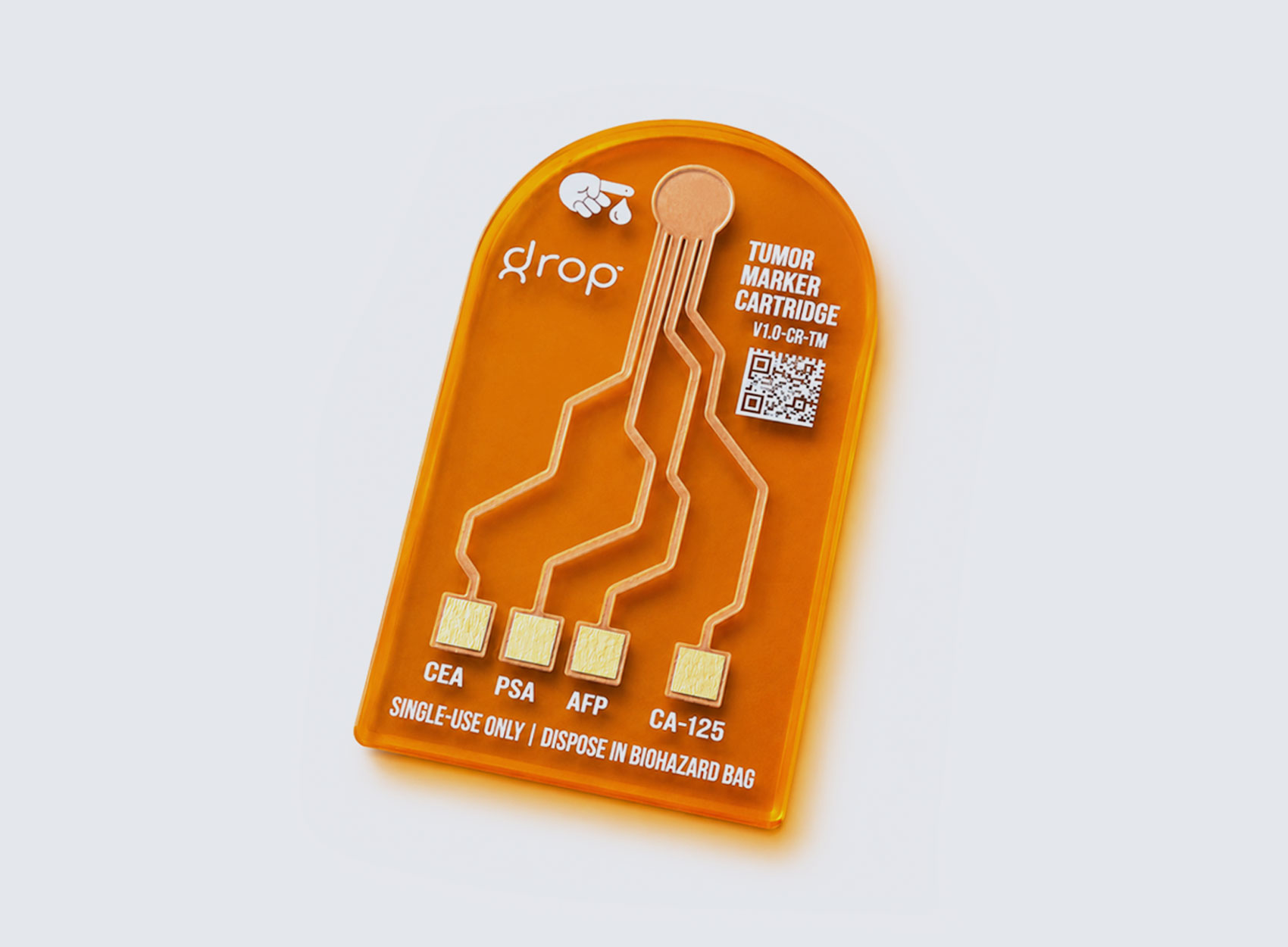
The same future, anticipated, is the one you turn to your advantage.